
Ailing "Megaberg" Sparks Surge of Microscopic Life
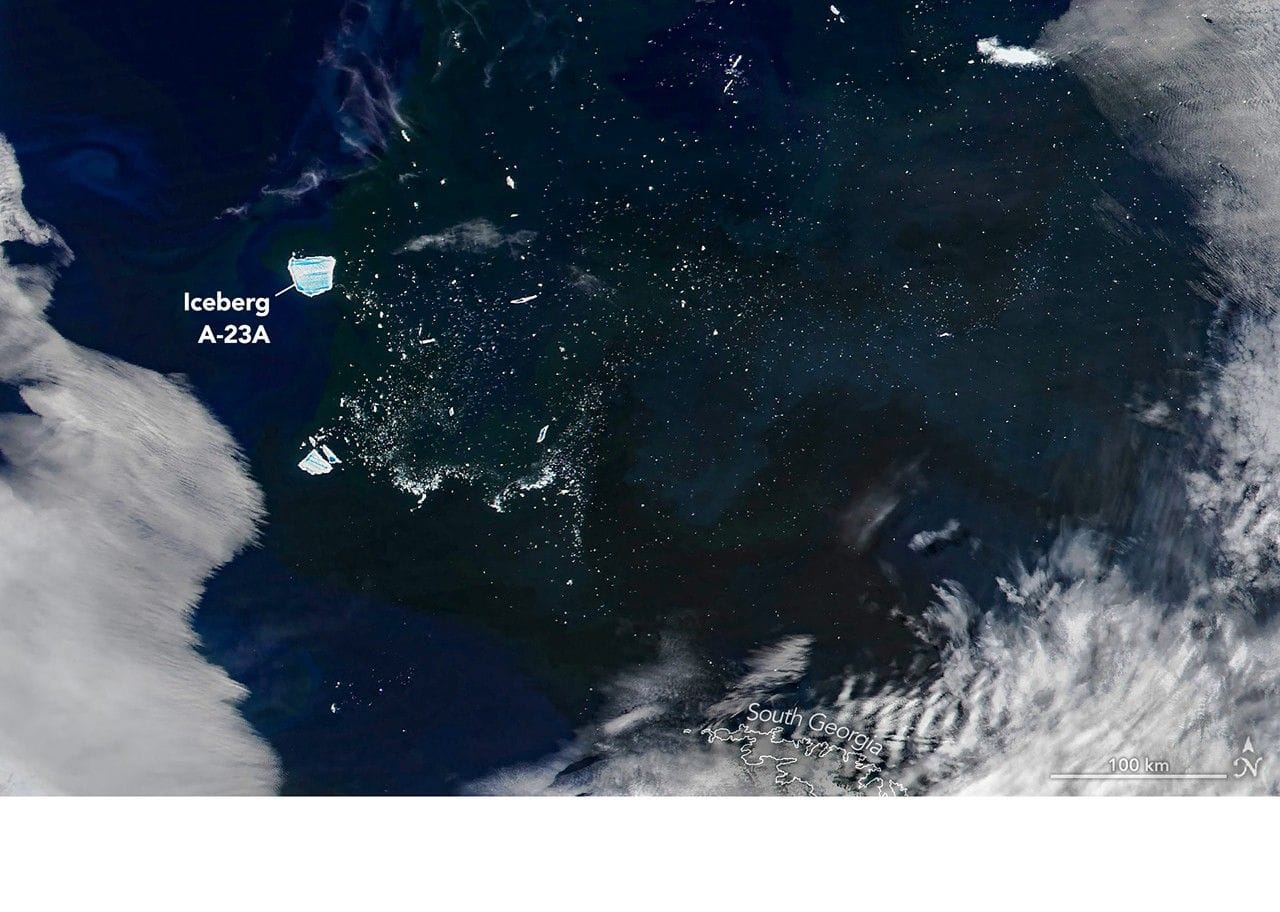
Iceberg A-23A, a long-traveling "megaberg," broke apart as it moved into warmer waters, shedding chunks of ice and cold meltwater. Satellite images show the debris field and plumes of meltwater drifting around the remaining fragments, and surface observations indicate an extensive phytoplankton bloom trailing the berg.
Phytoplankton form the base of the marine food web, produce a large share of Earth’s oxygen, and help transfer carbon from the atmosphere to the deep ocean. Melting icebergs can enhance their growth by creating a more stable surface layer and releasing iron, manganese, and macronutrients such as nitrates and phosphates that often accumulate on ice through dust or contact with bedrock.
Ocean-color measurements detected elevated chlorophyll-a concentrations near the bergs, a standard marker of phytoplankton abundance.
iceberg a-23a, megaberg, phytoplankton bloom, meltwater, chlorophyll-a, iron, manganese, nitrates, phosphates, satellite imagery