
Arctic Blast Brightened the West Florida Shelf
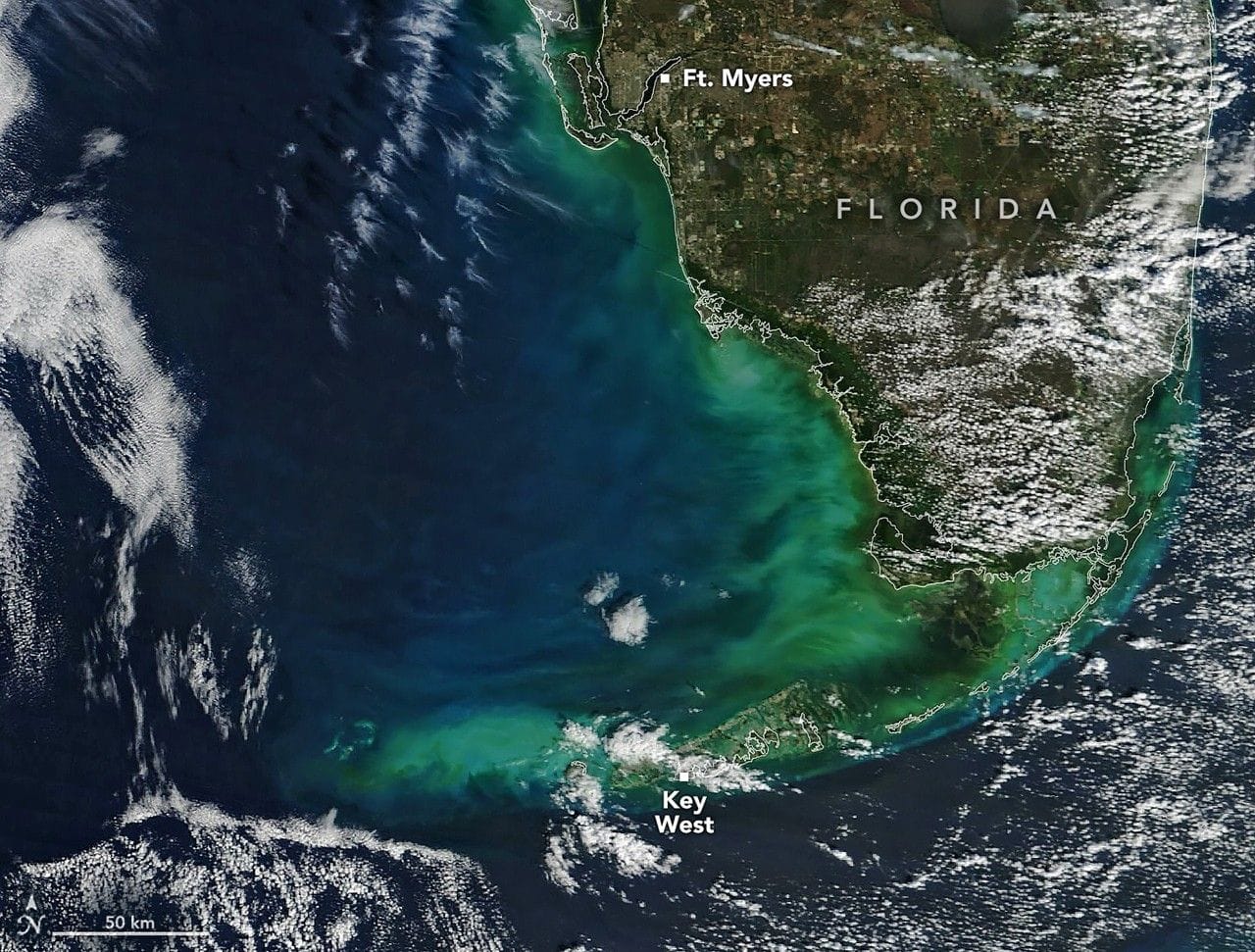
In late January and early February 2026, surges of Arctic air pushed into eastern North America, bringing cold, wintry conditions as far south as Georgia. At the same time, coastal waters off Florida’s west coast flashed brilliant shades of blue. On February 3, the MODIS instrument on the Terra satellite captured a striking image of brightened water over the West Florida Shelf, a broad, shallow carbonate ramp.
The vivid color came from suspended calcium carbonate mud—mostly the remnants of marine organisms living on the shelf. A comparison image from January 24 shows the area before the cold air arrived; the mud was largely kicked up by wind-stirred waters during the cold snap, James Acker said.
Cold air cooled the shallow bank waters, increasing their density so they sank and flowed offshore with the tides, carrying sediment toward the shelf edge. Landsat 9 imagery revealed paired “hammerhead” eddy features along the slope where dense currents carrying sediment met slower Gulf waters and curled into counterrotating vortices.
United States, West Florida Shelf
arctic air, west florida, shelf, calcium carbonate, suspended mud, modis, terra, landsat 9, hammerhead eddy, sediment plume