
A Century of New York Times Reporting From Antarctica
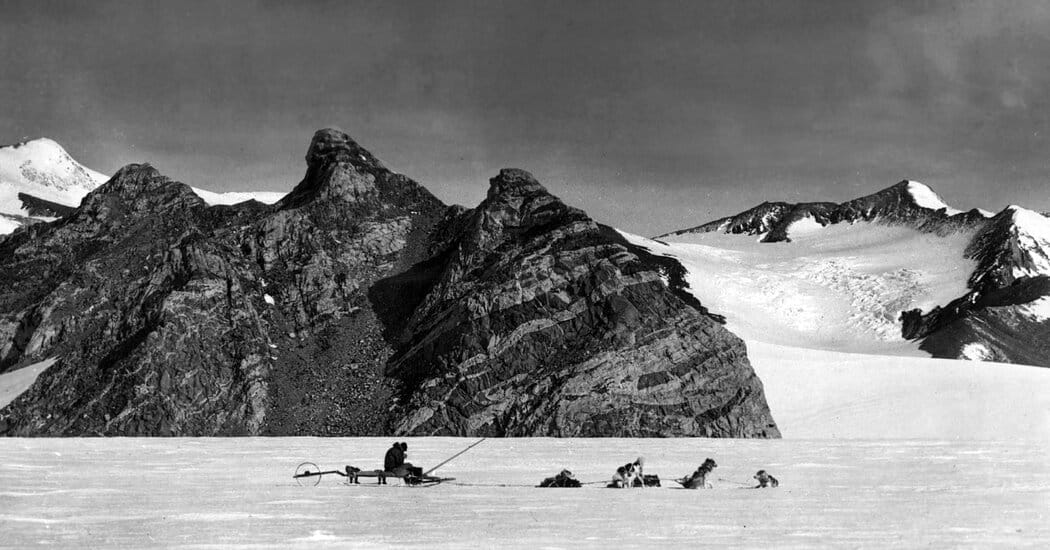
Raymond Zhong is on an eight-week expedition to Antarctica aboard the South Korean icebreaker Araon, which he said left Christchurch, New Zealand, on Dec. 27 and is carrying dozens of scientists and two New York Times journalists. The paper’s archive traces nearly a century of reporting from the continent, beginning with Russell Owen’s near-daily dispatches from Admiral Richard E.
Byrd’s 1928–30 expedition. Mr. Owen, who covered hardships and daily life on the voyage and later won a Pulitzer Prize, was called "the world’s first polar reporter." The Times’s publisher at the time, Adolph S. Ochs, helped fund Byrd’s voyage, and Byrd named features in Antarctica after members of the Ochs-Sulzberger family.
Coverage shifted over decades from exploration and national pride to systematic science. Early reports noted that much of the interior remained unknown and that scientists then understood little about glaciers; in 1937 Mr. Owen wrote that "what causes glaciers to retreat and advance...science does not know." After World War II nations eyed Antarctica’s strategic value until they signed a treaty that protects the continent as a scientific preserve.
Later reporting described attempts to drill the Ross ice shelf in 1976 to study "Antarctic bottom water," monitoring of the ozone hole, climate research and particle detection, and a 2016 effort cited as potentially costing more than $25 million to get better measurements in unstable parts of the West Antarctic ice sheet.
Key Topics
Science, Antarctica, Araon, Russell Owen, Richard E. Byrd, Ross Ice Shelf