
Cheap Chinese Solar Is Reshaping South Africa’s Power System and Economy
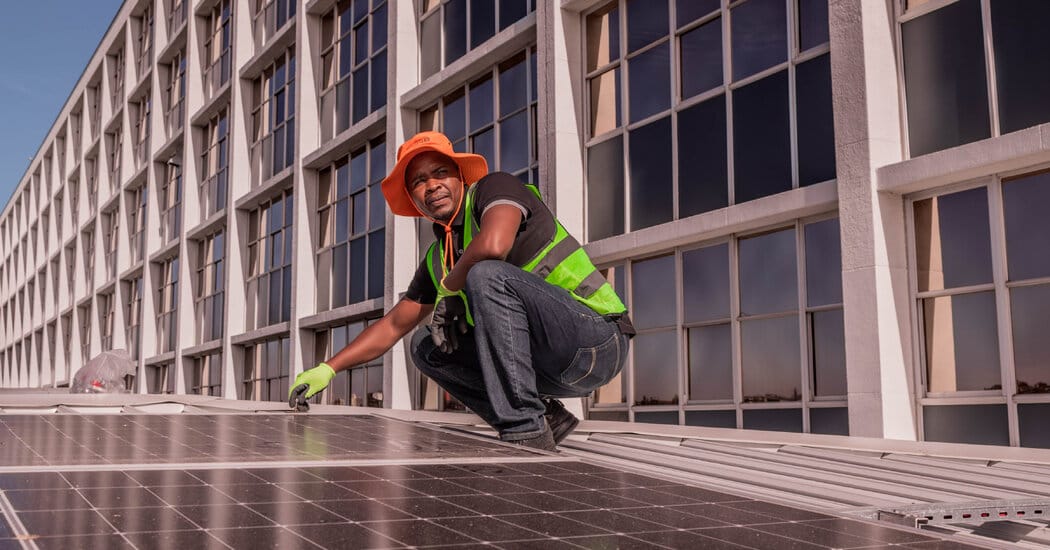
Falling prices for Chinese-made solar panels and batteries are driving rapid adoption across South Africa, from suburban homes to wineries, factories, shopping malls and mines, cutting bills and reducing reliance on the country’s aging coal plants. Solar rose from almost nothing in 2019 to roughly 10 percent of South Africa’s installed generating capacity, with private installations adding more than seven gigawatts in the past five years out of a national total of about 55 gigawatts.
The shift has created a “bottom-up movement” to escape unreliable power, Joel Nana of Sustainable Energy Africa said: “The broken system is unreliable electricity, expensive electricity or no electricity at all. We’ve been living in this situation forever.” China’s push into renewables is a key driver.
Over the first 10 months of 2025, solar imports from China to Africa rose about 50 percent, according to a review of Chinese export data by Ember. Chinese state-owned firms are also building utility-scale projects and bidding to build about 14,000 kilometers of transmission lines that South Africa needs to carry more solar power.
That dynamic is squeezing the state utility, Eskom. Every privately generated kilowatt reduces its revenue, helping to create the so-called “death spiral” in which customers install more solar, forcing price adjustments that prompt still more defections. Eskom has responded by easing licensing, allowing sales back to the grid and adding fixed connection charges.
Key Topics
World, United States, Solar, China, South Africa, Energy, Grid