
Court blocks Guard deployment in Illinois; Kavanaugh flags Insurrection Act route
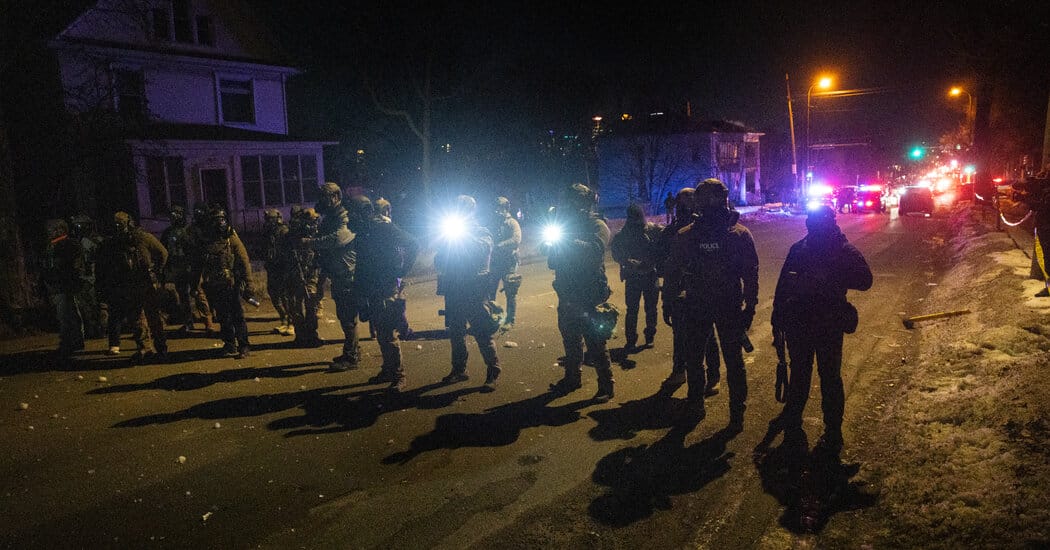
The Supreme Court refused to let the president deploy National Guard troops in Illinois under an obscure law, a rare loss for the administration, and Justice Brett M. Kavanaugh wrote in a concurring footnote that the decision did not address the president's authority under the Insurrection Act.
The unsigned majority, joined by five justices, rejected the administration's argument that "regular forces" referred to civilian law enforcement such as Immigration and Customs Enforcement and said the term referred to the military. The court said the administration had not shown that "regular forces" would be unable to execute the laws, and Justice Kavanaugh, while voting with the majority, accepted only part of its reasoning and wrote, "As I read it, the court's opinion does not address the president's authority under the Insurrection Act." The Insurrection Act, adopted in the nation's first century, authorizes the president to use the National Guard or traditional armed forces to quell widespread unrest and repeatedly says the president can use force "as he considers necessary." The article cites the 1827 precedent Martin v.
Mott, which held that "the authority to decide whether the exigency has arisen belongs exclusively to the president," and notes that, if lawfully invoked, the act would appear to satisfy the Posse Comitatus Act. The law has been used throughout U.S.
Key Topics
Politics, Insurrection Act, Donald Trump, Brett Kavanaugh, National Guard, Posse Comitatus