
Crowded electrons force excitons to break up and travel faster
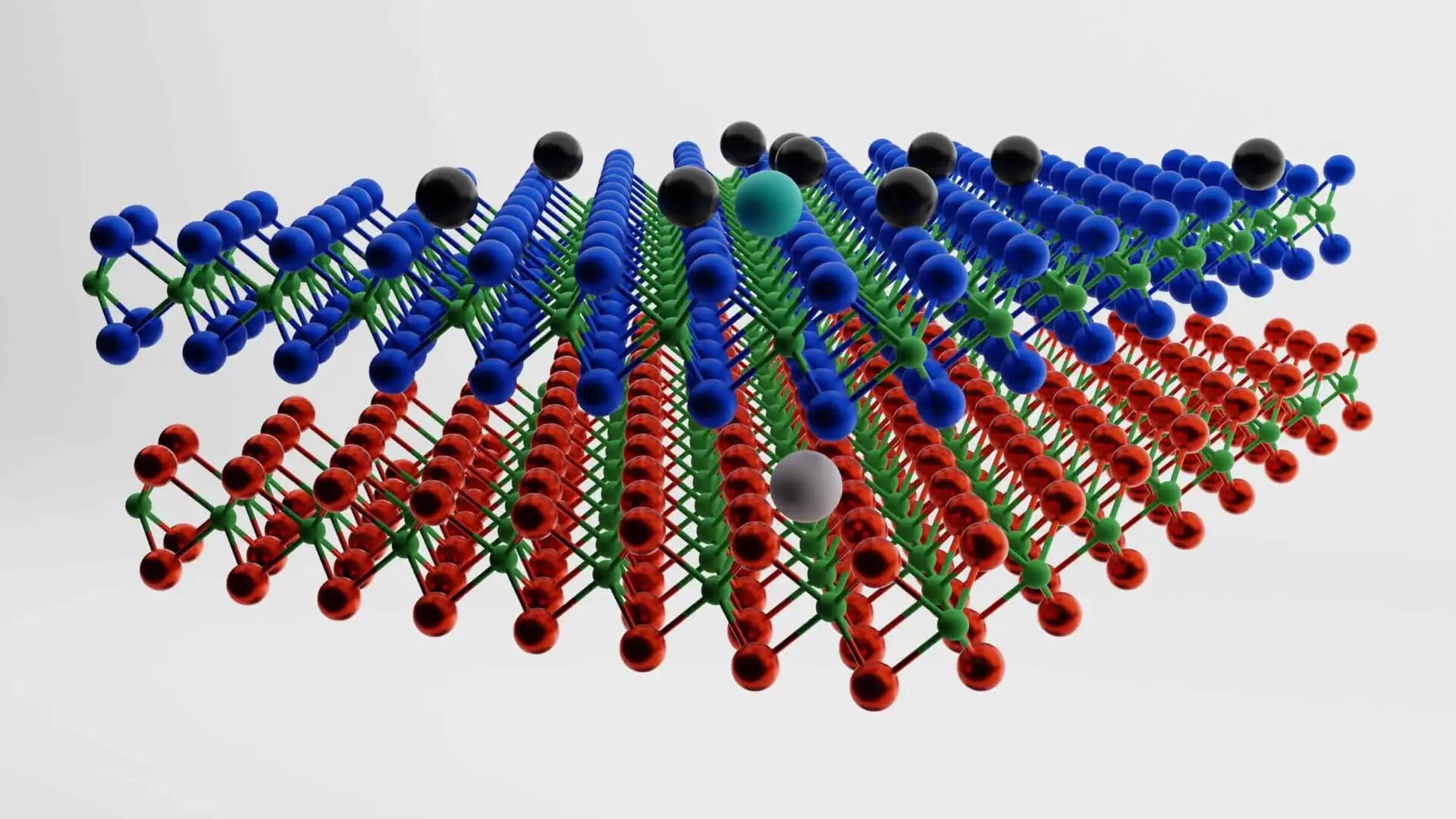
Researchers at the Joint Quantum Institute found that excitons—electron–hole pairs usually thought to remain tightly bound—can suddenly break up and move much faster when a material is flooded with electrons.
In carefully stacked two-layer materials with a grid of preferred sites, the team controlled electron density with voltage and created excitons with laser light. They tracked exciton motion by collecting the light emitted when excitons recombined.
As electron density rose, exciton diffusion initially slowed as expected, since lone electrons block available sites. But when nearly every site was occupied by an electron, the researchers observed a dramatic jump in exciton mobility instead of the expected halt.
The effect persisted across samples and in different laboratories. The team published their results in Science on Jan. 1, 2026.
The authors explain the surprise by noting that under very crowded conditions holes in excitons stop behaving as monogamous partners and repeatedly switch electrons. This “non‑monogamous hole diffusion” lets excitons take more direct routes and travel farther before recombining.
The finding overturns a simple expectation about fermion–boson crowding and suggests a voltage-controlled way to tune exciton mobility, which could be useful for experiments and technologies that exploit excitons in electronic and optical devices.
Key Topics
Science, Exciton, Electron, Hole, Joint Quantum Institute, Pranshoo Upadhyay