
Delhi’s smog crisis deepens as protests and health warnings go unheeded
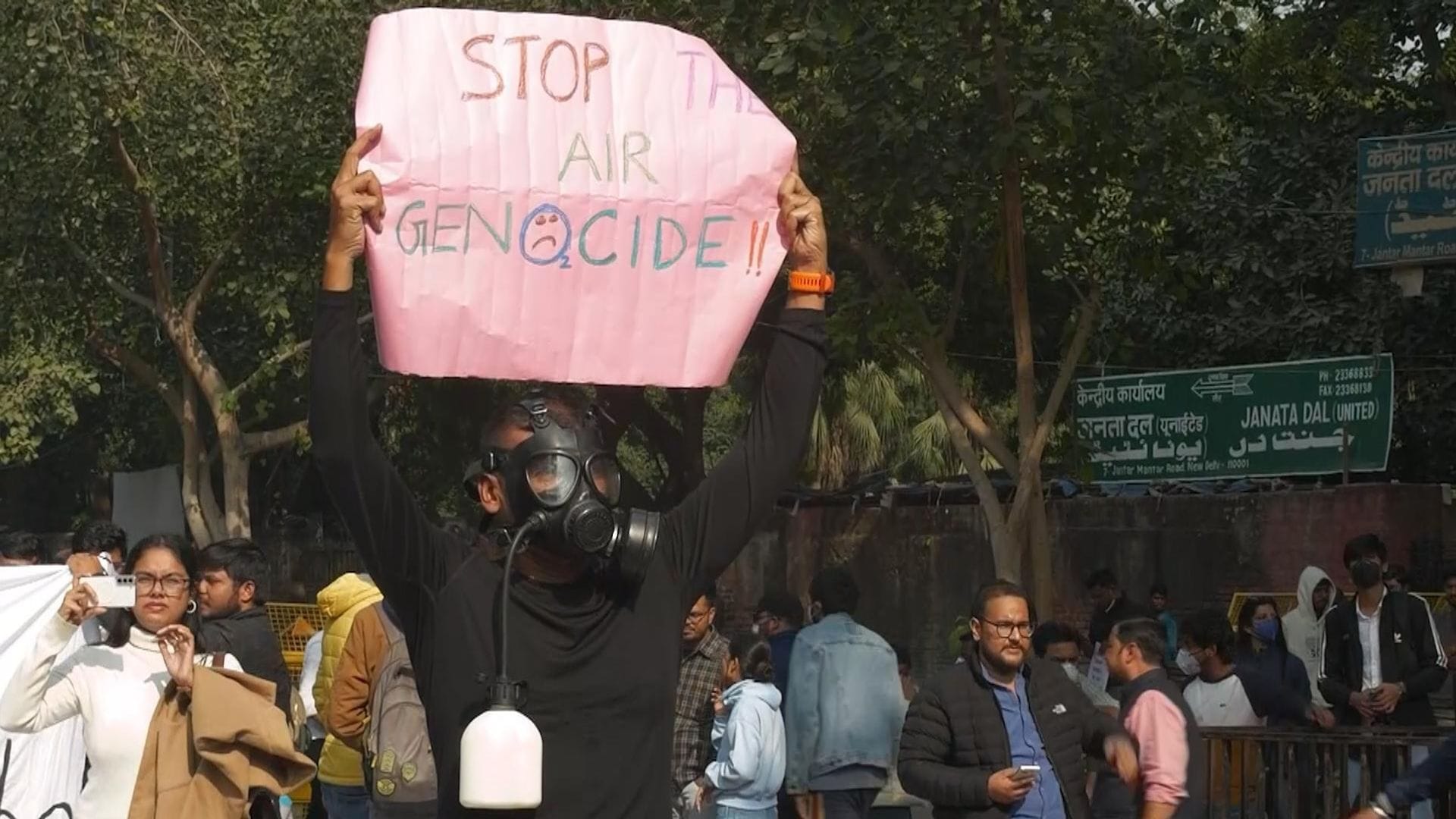
“The air is absolutely poison, in the last two years we've not had even one single good a day,” says Bhavreen Kandhari, an activist leading a public movement for clean air. Hundreds gathered at Jantar Mantar, near the Indian parliament, to demand action as the winter session takes place.
Delhi is the world's most polluted capital. Vehicle emissions, farm fires, industrial pollution, power plants, waste, construction and household energy combine to create a lethal mix of gases and tiny inhalable particles known as particulate matter. PM2.5 refers to particles less than 2.5 micrometers in diameter — small enough to penetrate deep into the lungs and enter the bloodstream.
Doctors warn of severe respiratory, heart and reproductive problems, cognitive decline and reduced life expectancy. Since cold weather set in, the air quality index in the capital has repeatedly been rated very poor, severe or hazardous, far above World Health Organization safe levels.
The UN Environment Programme's Global Environment Outlook-7 report warned that 99% of the world's population is exposed to some form of air pollution, and more than 90% of pollution-related deaths occur in low and middle-income countries. A 2022 Lancet report found that fossil-fuel air pollution caused 1.72 million deaths in India.
Key Topics
Health, World, Air Pollution, Delhi, Environment, Agriculture, Government