
E.P.A. Will Stop Assigning Dollar Value to Lives Saved from Air Pollution
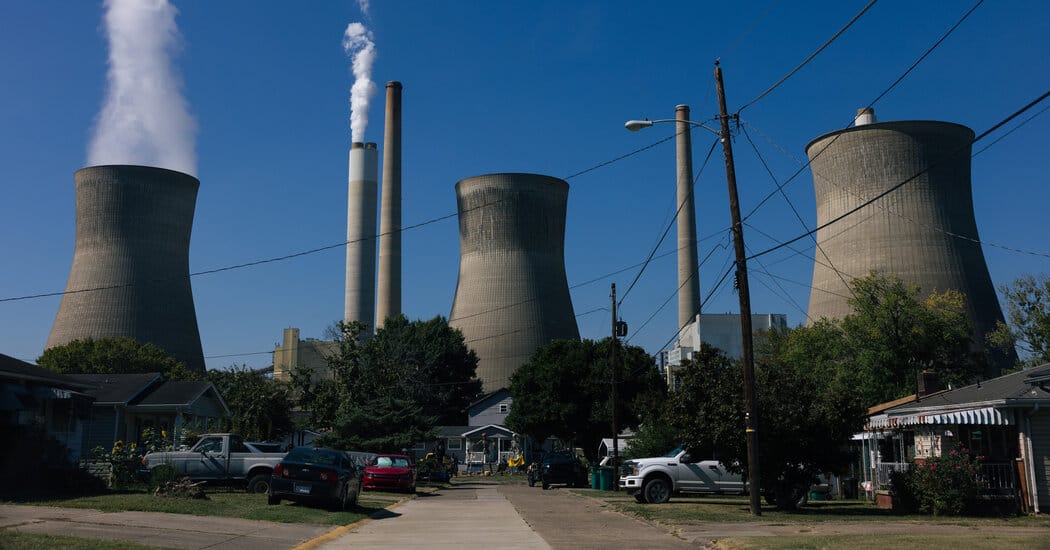
The Environmental Protection Agency, under President Trump, plans to stop assigning a monetary value to lives saved by reducing two common air pollutants — fine particulate matter (PM2.5) and ozone — when setting industry rules, according to internal agency emails and documents reviewed by The New York Times.
For decades the E.P.A. has tallied health benefits such as avoided asthma attacks and premature deaths to justify clean-air rules. The Biden administration had tightened PM2.5 limits and estimated that a recent rule could prevent up to 4,500 premature deaths and 290,000 lost workdays in 2032, and that every $1 spent on reducing PM2.5 could bring as much as $77 in health benefits.
PM2.5 are particles small enough to penetrate deep into the lungs and bloodstream; ozone is a smog-forming gas. Long-term exposure to both pollutants is linked to asthma, heart and lung disease and premature death. The Trump administration says the health estimates are uncertain and will, instead, estimate only the costs to businesses of complying with regulations.
An E.P.A. spokeswoman, Carolyn Holran, said the agency is "still considering the impacts that PM2.5 and ozone emissions have on human health" but will not be assigning them dollar values in cost-benefit analyses: "Not monetizing does not equal not considering or not valuing the human health impact." A Dec.
Key Topics
Politics, Environmental Protection Agency, Trump Administration, Ozone, Cost-benefit Analysis, Regulatory Impact Analysis