
ER-2 Aircraft Captures Moonlight to Calibrate Space Sensors
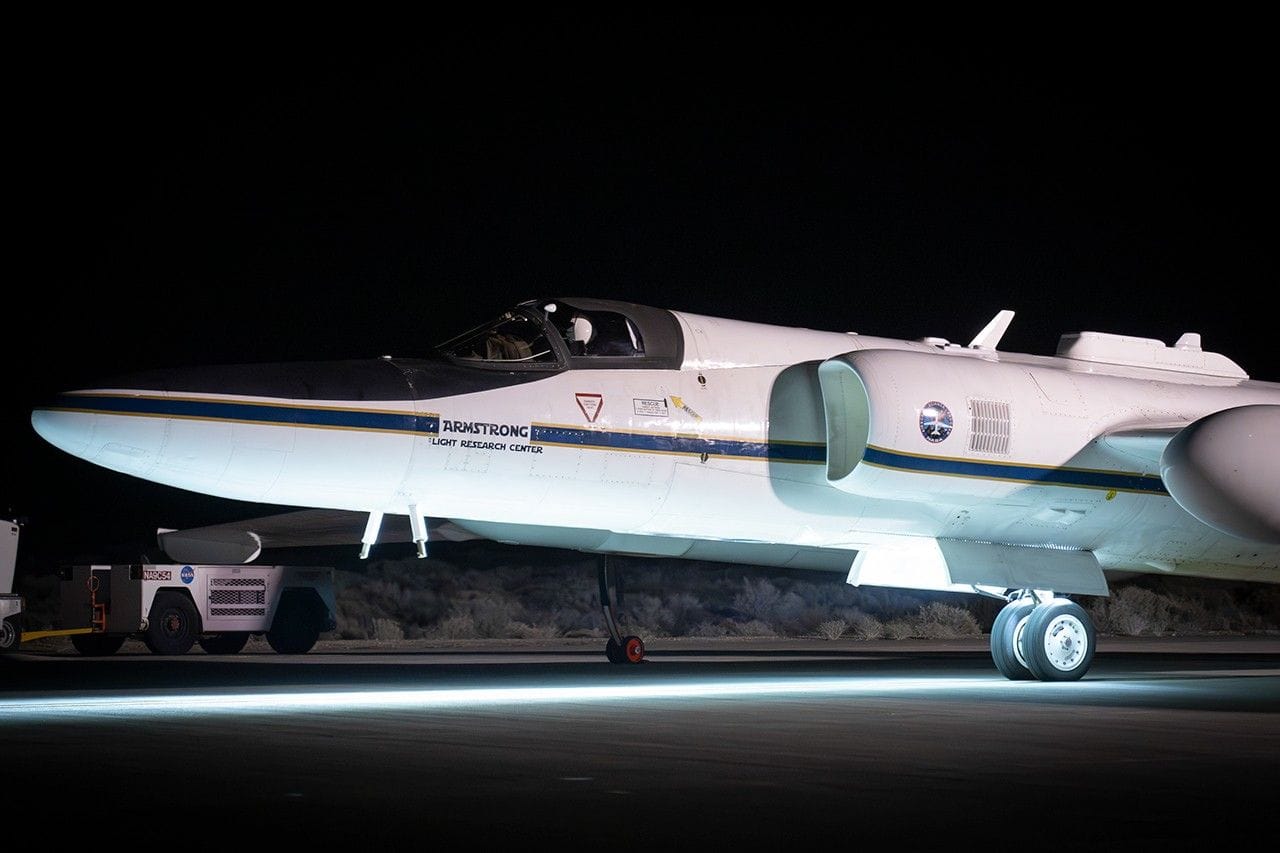
An instrument designed to measure the Moon’s brightness completed a three-week mission on a high-flying plane on Feb. 5. Using the Moon as a natural calibration source improves the accuracy of space-based sensors that provide data to observe weather patterns, survey agriculture, and study the Earth’s ecosystems.
The Airborne Lunar Spectral Irradiance, or air-LUSI, flew over the West Coast on a high-altitude ER-2 aircraft based at the Armstrong Flight Research Center in Edwards, California, turning the plane into an airborne lunar observatory. The instrument was carried to an altitude of about 70,000 feet, above roughly 95% of the Earth’s atmosphere.
By measuring moonlight from near-space, scientists can ensure satellite instruments remain precise without adding costly onboard calibration equipment. The air-LUSI team has been operating missions to measure moonlight since 2022. The Moon’s surface reflects light consistently and is unaffected by Earth’s changing environment, making moonlight a reliable reference.
United States, Edwards, California
moon, moonlight, air-lusi, er-2, armstrong center, edwards california, lunar calibration, satellite calibration, airborne observatory, earth observation