
Study Says Exemptions, Evasion and Delays Blunted Effect of Trump’s Tariffs
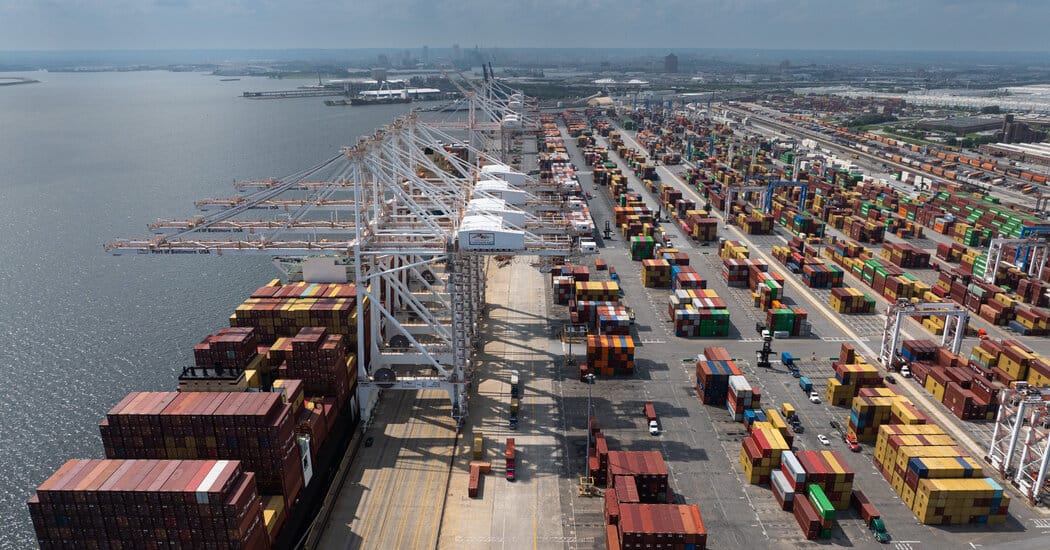
President Trump raised U.S. import taxes to levels not seen in a century, and prices rose while some businesses struggled. But a new working paper from economists at Harvard and the University of Chicago finds the overall impact was smaller than many expected. The researchers calculated that the tariff rate actually paid by importers was 14.1 percent at the end of September, about half the administration’s nominal, trade-weighted rate of roughly 27.4 percent that month and down from an announced peak near 32.8 percent in April.
Several factors reduced the effective rate: exemptions for goods already en route when tariffs were announced, industry- and country-specific carve-outs, slower implementation on some products and evasion by some firms that misreported value, origin or content on customs forms. Semiconductors were a notable exception to high tariffs.
The authors estimated an actual tariff of about 9 percent on chips and roughly 8 percent on semiconductor-heavy exports from places like Taiwan, far below some of the administration’s official rates. Canada and Mexico also received substantial relief through rules under the U.S.-Mexico-Canada Agreement.
Declarations of compliance from those countries rose to about 90 percent in 2025 from under 50 percent the prior year, reducing the tariffs actually paid on many North American goods. The paper found that most of the tariff burden fell on U.S. firms and consumers, not foreign suppliers.
Key Topics
Business, Donald Trump, Gita Gopinath, Brent Neiman, Harvard, Semiconductors