
Flagstaff named Dark Sky Place of the Year as winter reveals Milky Way over downtown
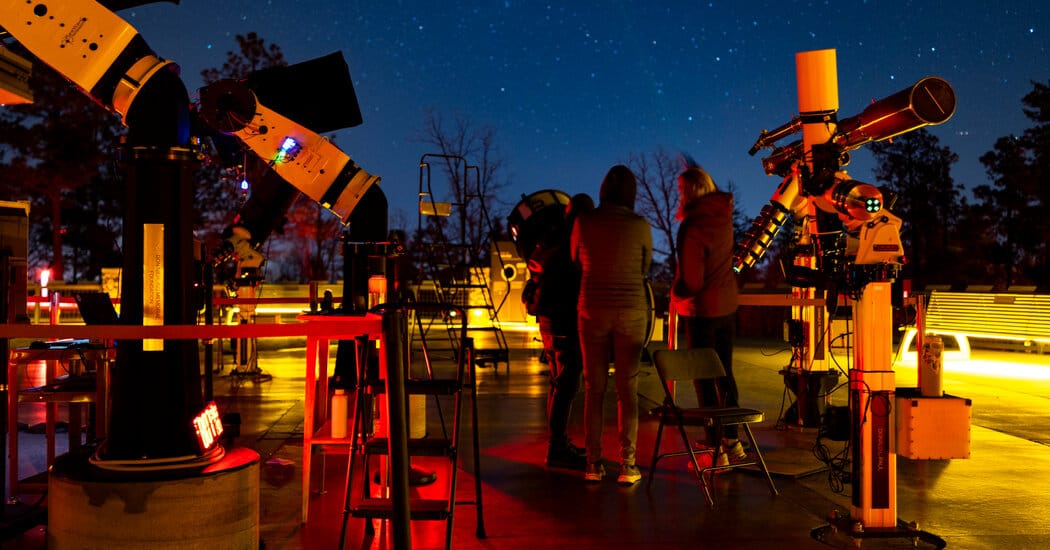
Flagstaff, Ariz., the world’s first and largest dark sky city, was named Dark Sky Place of the Year by DarkSky International in November, and longer winter nights make the Milky Way and hundreds of stars visible even from the city’s downtown. For decades the city has preserved night darkness through intentional lighting design, legal enforcement and community stewardship.
The effort dates to astronomers such as Percival Lowell, who opened Lowell Observatory in 1894; the observatory still draws more than 100,000 visitors a year and offers outdoor telescopes and an open planetarium that looks at the real sky above. Flagstaff uses measures such as amber LEDs that cut green and blue light, shielding on outdoor fixtures and limits on lumens per acre.
According to Dr. Adams of the Flagstaff Dark Skies Coalition, switching from broadband white LEDs to narrow-band amber LEDs can reduce sky glow by up to 90 percent, and the coalition works with city officials and businesses to distribute free amber bulbs. Buffalo Park, a few miles from downtown, measures about a 4 on the Bortle scale, below the level where the Milky Way can be seen.
Dark-sky practices are part of daily life—businesses and roads reference the designation—but they have also prompted local disputes over porch lights and holiday decorations, including a recent giant blowup reindeer. “We’re not all the way perfect,” Dr. Adams said.
Key Topics
Science, Flagstaff, Lowell Observatory, Darksky International, Amber Leds, Bortle Scale