
Freshwater springs discovered beneath exposed areas of Great Salt Lake
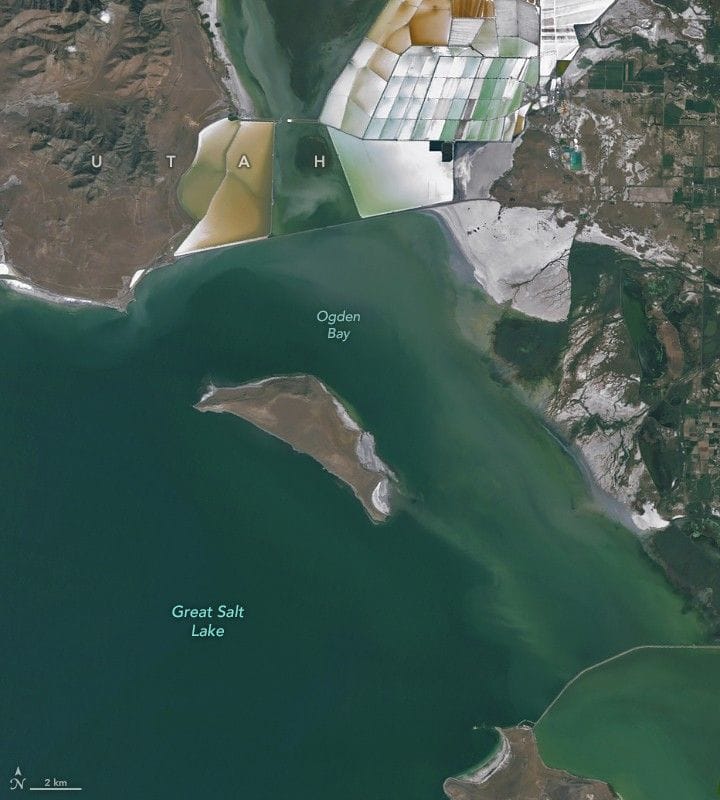
Declining water levels in parts of the Great Salt Lake have exposed reed-covered mounds that reveal a previously unrecognized network of freshwater springs feeding directly into the lake basin, researchers from the University of Utah report. Satellite images, including a Landsat 9 scene from September 13, 2025, show dozens of small circular features along the eastern edge of the drying lakebed in Farmington Bay, Ogden Bay, and Bear River Bay.
Researchers first noted circular patterns roiling the water surface from airboats years ago and later matched those patterns to features visible in Landsat and other satellite imagery. Field expeditions over the past year—conducted using snow bikes and hand tools to avoid damaging the playa—deployed piezometers and other instruments and found groundwater that was saltier near feature edges but fresher near the centers, where phragmites grow as circular mounds that stand out against the bright playa.
Aerial electromagnetic surveys led the team to conclude there are probably hundreds of such groundwater-fed oases across newly exposed parts of the playa. The team describes the spots as "windows" into an extensive freshwater reservoir beneath the lake. Their analysis suggests discharge from these springs may account for as much as 12 percent of the lake’s total water budget, compared with roughly 3 percent hydrologists had assumed before.
Key Topics
Science, Great Salt Lake, Ogden Bay, Farmington Bay, Bear River Bay, Freshwater Springs