
FUELEAP develops hybrid fuel-cell power system for small aircraft
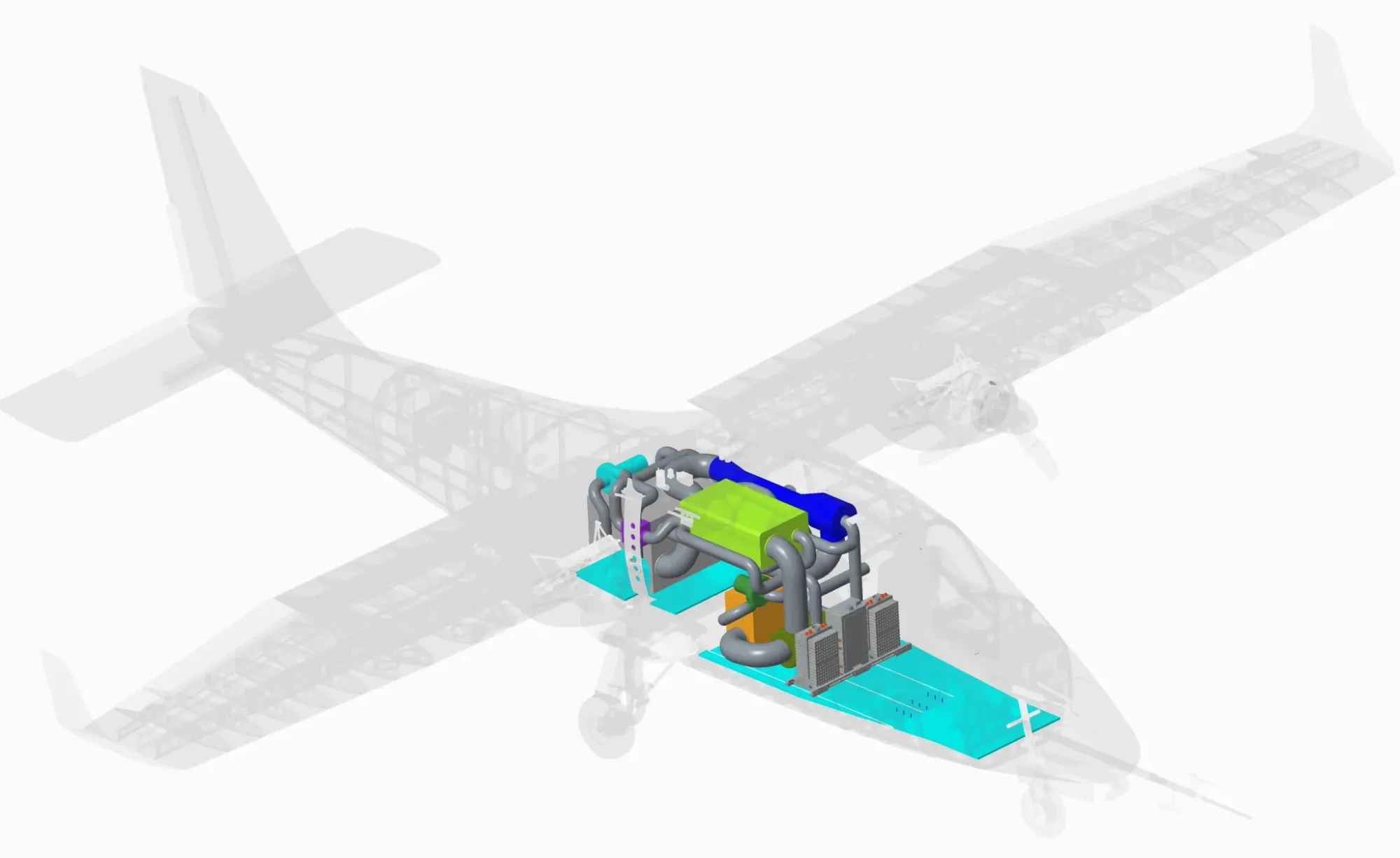
NASA’s work on fuel cell electric power systems goes back to Project Gemini in the 1960s. Building on that legacy, Langley’s ASAB branch led the Fostering Ultra Efficient, Low-Emitting Aviation Power (FUELEAP) activity to develop a hybrid-electric fuel cell power system for future electric aircraft.
Fuel cells generate electricity by combining hydrogen and oxygen through a catalyst, but storing hydrogen as a cryogenic liquid or high-pressure gas requires tanks and plumbing that are heavy, complex, and costly for small airplanes. FUELEAP explored an alternative: gathering hydrogen by reforming conventional hydrocarbon fuels that can be stored on board without specialized tanks or extra ground infrastructure.
The project integrated advances in Solid Oxide Fuel Cells, high-yield fuel reformers, and hybrid-electric aircraft architectures into a single power system.
nasa, fueleap, fuel cell, hybrid-electric, solid oxide, fuel reformer, hydrogen, hydrogen storage, small aircraft, aviation power