
Gaia-aided microlensing reveals a Saturn-mass rogue planet in the 'Einstein desert'
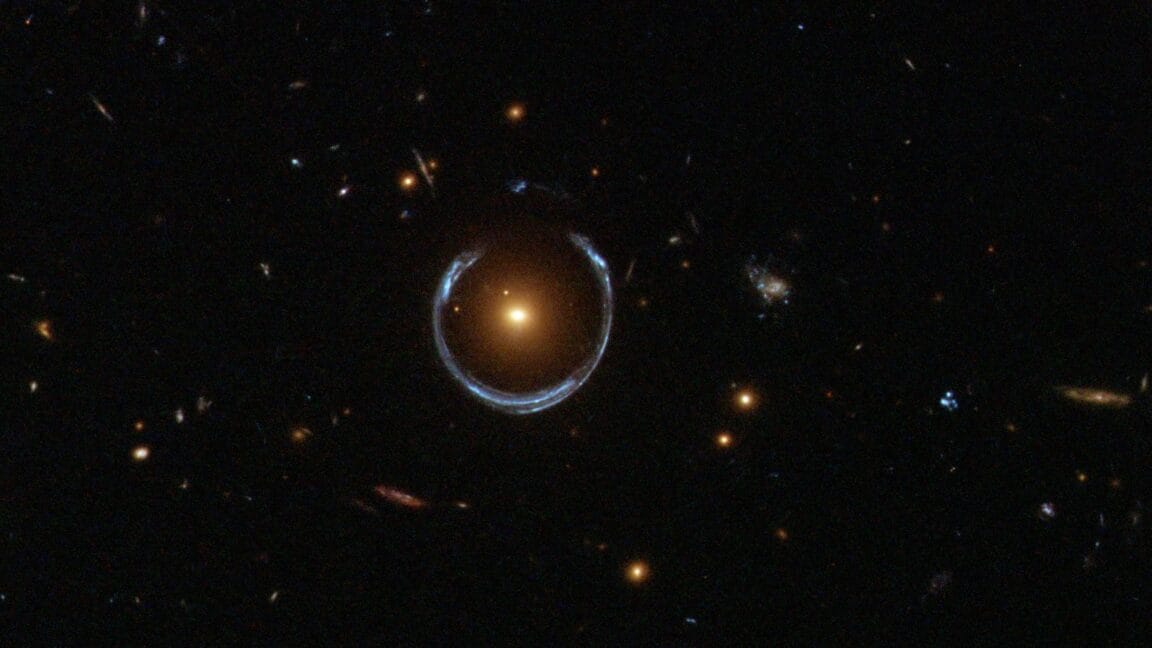
Researchers used ground-based microlensing surveys and fortuitous observations by the Gaia space telescope to identify a Saturn-sized free-floating planet located in the so-called "Einstein desert." It is the first microlensing detection placed in that gap. Microlensing finds planets when an object passes between Earth and a background star, briefly brightening the star via gravitational lensing.
Many microlensing detections are thought to be rogue planets—objects not bound to any star and drifting through interstellar space. The event, recorded by the Korea Microlensing Telescope Network as KMT-2024-BLG-0792 and by the Optical Gravitational Lensing Experiment as OGLE-2024-BLG-0516, occurred in early May 2024.
Because Gaia was unusually well oriented, it observed the event six times over 16 hours from its L2 location, with the peak brightness arriving about two hours later than it did for Earth-based telescopes. That parallax measurement made it possible to determine the event's distance.
Pre- and post-event images identified the background star as a red giant in the galactic bulge. Combining the parallax with the size of the Einstein ring, the team estimated the lensing object’s mass at roughly 0.2 times Jupiter—slightly smaller than Saturn—and placed it in the middle of the Einstein desert.
Key Topics
Science, United States, Exoplanets, Microlensing, Gaia, Rogue Planets, Einstein Desert