
Geminids meteor shower peaks Dec. 13–14 with moon about one‑third full
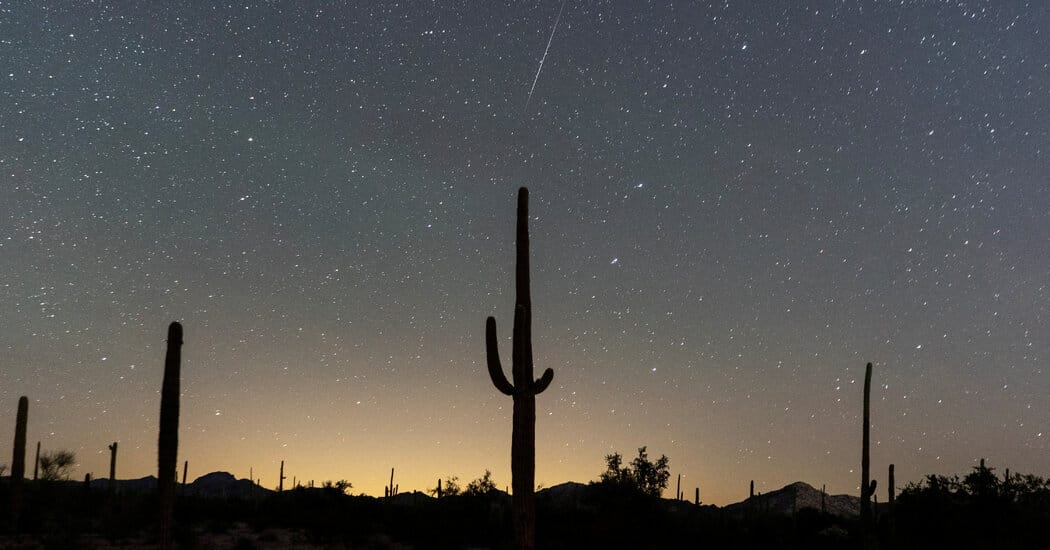
The Geminids meteor shower, one of the strongest annual showers, reaches its peak Saturday night into Sunday morning — Dec. 13 to 14 — after being active since Dec. 4 and will remain active until Dec. 17. It is best viewed from the Northern Hemisphere, though observers south of the Equator can also see the display.
The moon will be about one‑third full during the peak, according to the International Meteor Organization. The shower is caused by debris from an asteroid. Meteor showers occur when Earth passes through rubble trailing a comet or asteroid; the debris, which can be as small as a grain of sand, burns up in Earth’s atmosphere and leaves glowing streaks.
From Earth, meteors from a given shower appear to come from the same point in the sky — the Geminids radiate from the constellation Gemini — and the peak is the short interval when Earth crosses the densest part of the debris stream. Michelle Nichols, director of public observing at the Adler Planetarium in Chicago, recommends forgoing telescopes or binoculars for meteor watching: "You just need your eyes and, ideally, a dark sky." Moonlight affects visibility the same way as light pollution, washing out fainter meteors, and the best viewing window is generally between midnight and sunrise.
Give your eyes at least 30 minutes to adjust to the dark, and use planetariums, local astronomy clubs or maps to find darker skies away from bright lights.
Key Topics
Science, Geminids, Gemini, International Meteor Organization, Global Meteor Network, Adler Planetarium