
Great Britain hits record renewables generation as solar output jumps
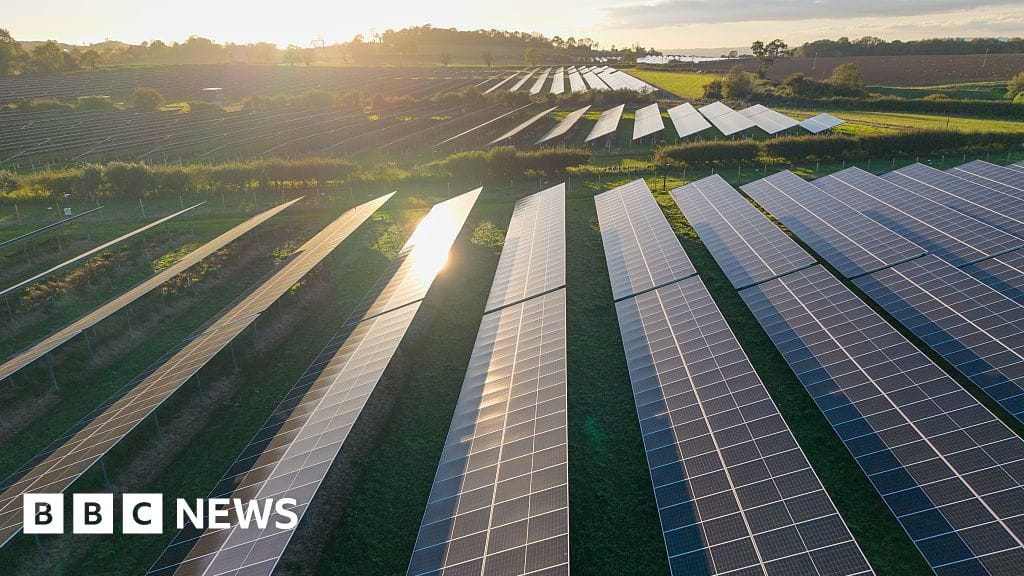
Renewable electricity production in Great Britain reached a new high in 2025, BBC analysis of provisional National Energy System Operator (Neso) data shows, driven by strong wind output and a large rise in solar generation. Wind was the single biggest renewable source, producing more than 85 TWh and supplying nearly 30% of Britain’s electricity.
Overall renewables — wind, solar, hydro and biomass — generated over 127 TWh, up from 119 TWh in 2024. Solar saw the biggest year-on-year increase, producing more than 18 TWh (over 6% of electricity), an increase of more than 4 TWh on 2024. The UK’s sunniest year on record and the expansion of large farms and about 250,000 new small rooftop installations helped push solar to new highs; at peak in July solar supplied more than 40% of generation in some half-hour periods.
Despite the renewables record, gas generation also rose, to more than 77 TWh (roughly 27% of electricity), up from 72 TWh in 2024. That increase, along with factors such as lower nuclear output and the 2024 closure of the last coal plant, meant Britain’s average grid carbon intensity edged up to 126 gCO2/kWh from 124 gCO2/kWh in 2024, though it remains far below levels a decade earlier.
Analysts warned the growth, while strong, is not yet the rapid scale-up required to meet the government's “clean power” aim — defined as 95% of electricity from renewables and nuclear by 2030.
Key Topics
Sports, United States, Science, Renewables, Wind, Solar, Gas