
Hubble and ground telescopes detect gas wake from Betelgeuse companion
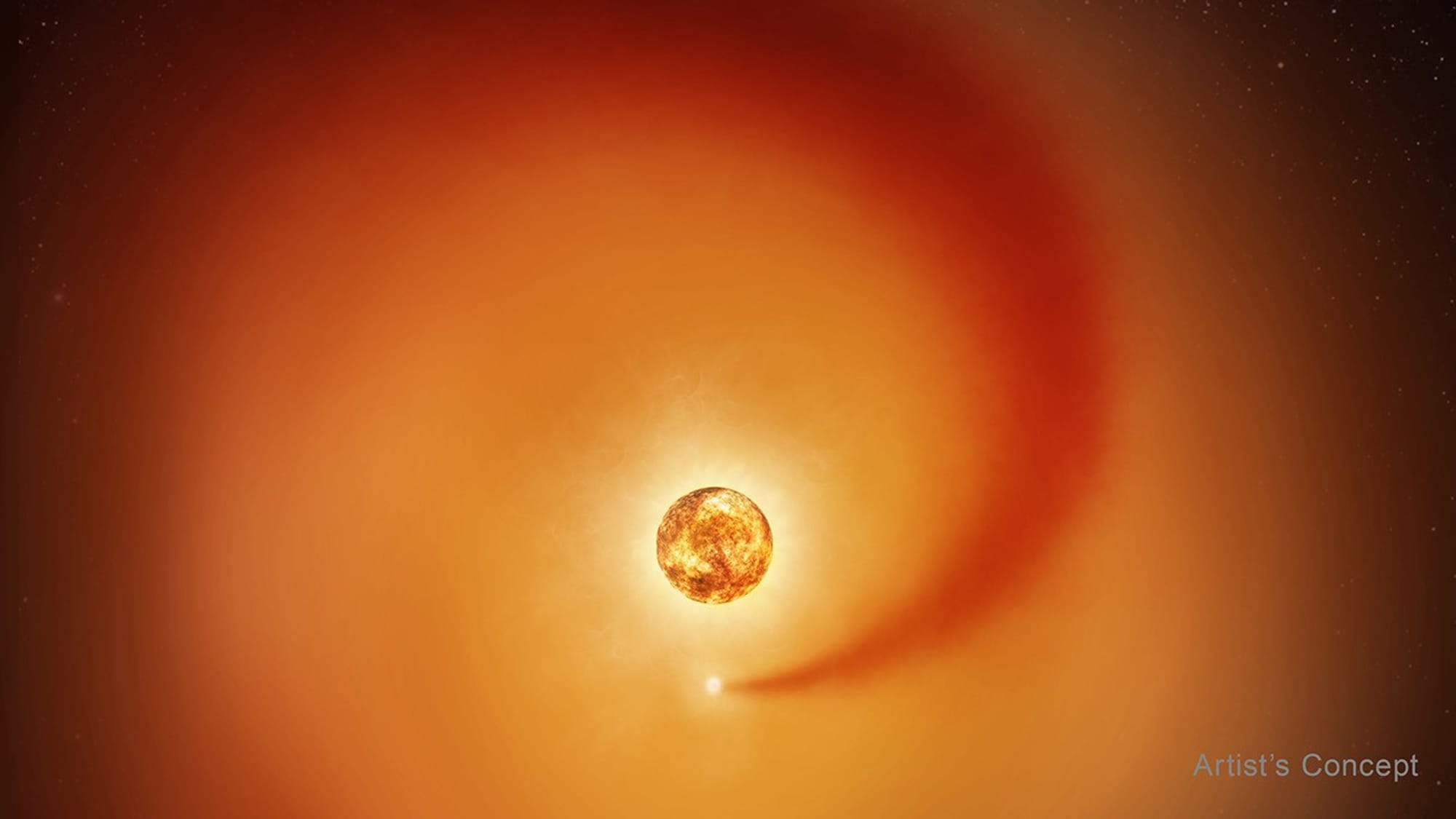
Astronomers using NASA’s Hubble Space Telescope and ground-based observatories have detected a trail of dense gas in Betelgeuse’s extended atmosphere created by a recently discovered companion star, Siwarha, researchers at the Center for Astrophysics | Harvard & Smithsonian report.
The team tracked changes in the star’s light over nearly eight years and identified shifts in Betelgeuse’s spectrum and the speed and direction of gases that reveal a denser wake as the companion plows through the outer atmosphere. That pattern appears after the companion crosses in front of Betelgeuse every six years, about 2,100 days, matching theoretical models.
The results were presented at the 247th meeting of the American Astronomical Society in Phoenix and are accepted for publication in The Astrophysical Journal; observations combined Hubble data with ground telescopes at the Fred Lawrence Whipple Observatory and Roque de Los Muchachos Observatory.
"It’s a bit like a boat moving through water. The companion star creates a ripple effect in Betelgeuse’s atmosphere that we can actually see in the data," said Andrea Dupree, an astronomer at the CfA and the lead study author. Researchers say the finding resolves a major mystery about Betelgeuse’s changing appearance and helps explain past puzzling behaviour, including the star’s unexpected fainting in 2020 and the long, 2,100-day secondary period.
Key Topics
Science, Betelgeuse, Siwarha, Hubble Space Telescope, American Astronomical Society, Astrophysical Journal