
Ice to Fuel: NASA Tests Technology for Refueling Landers
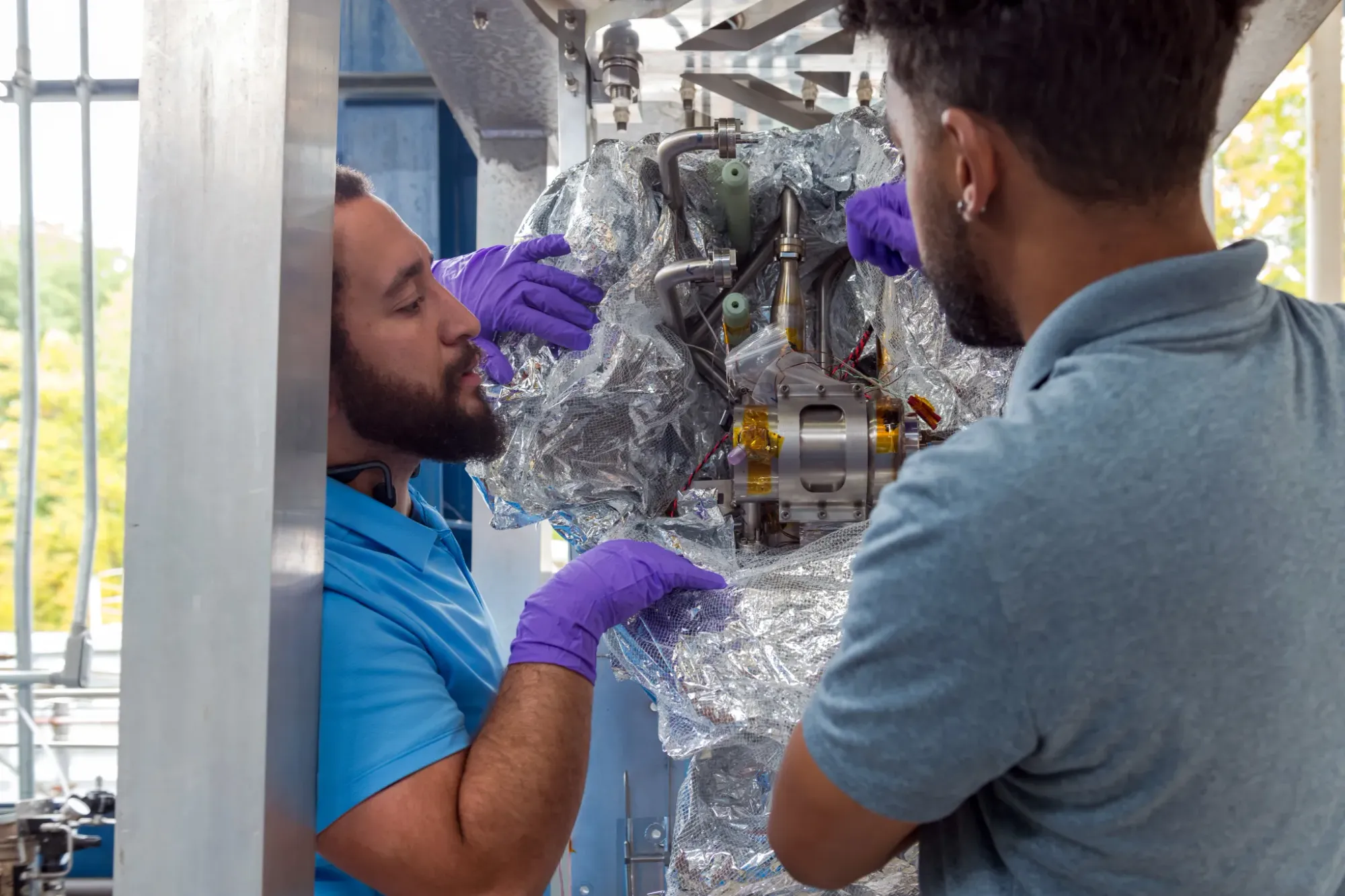
The farther the destination, the more fuel a rocket needs, and carrying more fuel makes the spacecraft heavier. Engineers at NASA’s Glenn Research Center are testing CryoFILL (Cryogenic Fluid In-Situ Liquefaction for Landers) to change that dynamic by producing and liquefying oxygen on the Moon or Mars, reducing the propellant needed at launch and extending surface operations.
“If you think about how much fuel your spacecraft would need to go to Mars and come home, it’s quite a lot,” said Evan Racine, CryoFILL project manager at NASA Glenn. Through the Artemis program, NASA plans to send astronauts on increasingly ambitious lunar missions and to build a foundation for crewed trips to Mars.
To sustain a long-term presence on the Moon, NASA aims to use local resources to make products such as propellant. Oxygen, a key ingredient of rocket fuel, can be extracted from water ice found in permanently shadowed regions of the Moon; it is mined as a gas and must be cooled and condensed into liquid form to be used as fuel.
nasa, cryofill, glenn research, liquid oxygen, lunar ice, propellant, in-situ, lander refueling, artemis program, mars