
Inside the Cleveland Orchestra’s rehearsals under Franz Welser-Möst
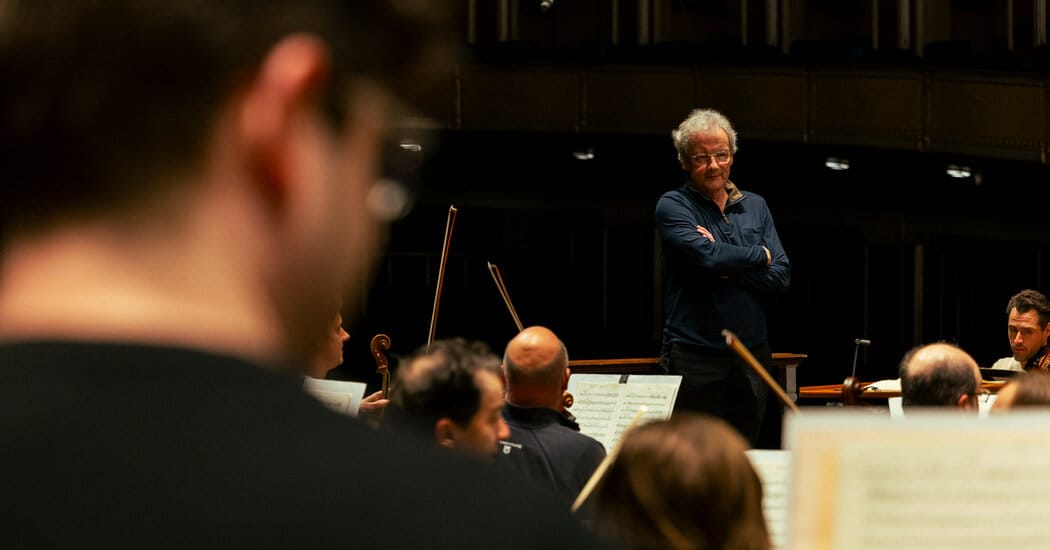
David Allen reported from Cleveland on how the Cleveland Orchestra prepares a program under its longtime music director, Franz Welser-Möst, observing rehearsals for Mozart’s “Jupiter” Symphony and Shostakovich’s Symphony No. 11 ahead of performances at Carnegie Hall. Allen spent three days watching the ensemble go from first rehearsal to dress, and said the orchestra—long regarded as one of America’s finest—remains marked by “sophistication and rigor” even if it does not have the largest budget.
Rehearsals are governed by labor agreements and most programs receive four rehearsals of up to two and a half hours: one on Tuesday morning, two on Wednesday and a dress on Thursday morning before the concert that night. Welser-Möst, who has been music director for more than 23 years, told Allen, “I doubt if any other orchestra comes as well prepared as this one,” and the critic described his relationship with the players as intuitive enough that much can be taken on trust and experience.
Allen reported details of Welser-Möst’s methods: forensic precision, a habit of erasing tiny intonation discrepancies and routines he likened to “brushing your teeth,” along with a leadership style that softens criticism with phrases such as “Maybe it’s my fault, but.” Musicians quoted by Allen included Michael Sachs (principal trumpet since 1988), Eliesha Nelson (a violist of 25 years) and Nathaniel Silberschlag (principal horn, 27).
Key Topics
Culture, Cleveland Orchestra, Franz Welser-möst, Carnegie Hall, Jupiter Symphony, Shostakovich