
JPL Tests Drones in Death Valley to Improve Mars Autonomy
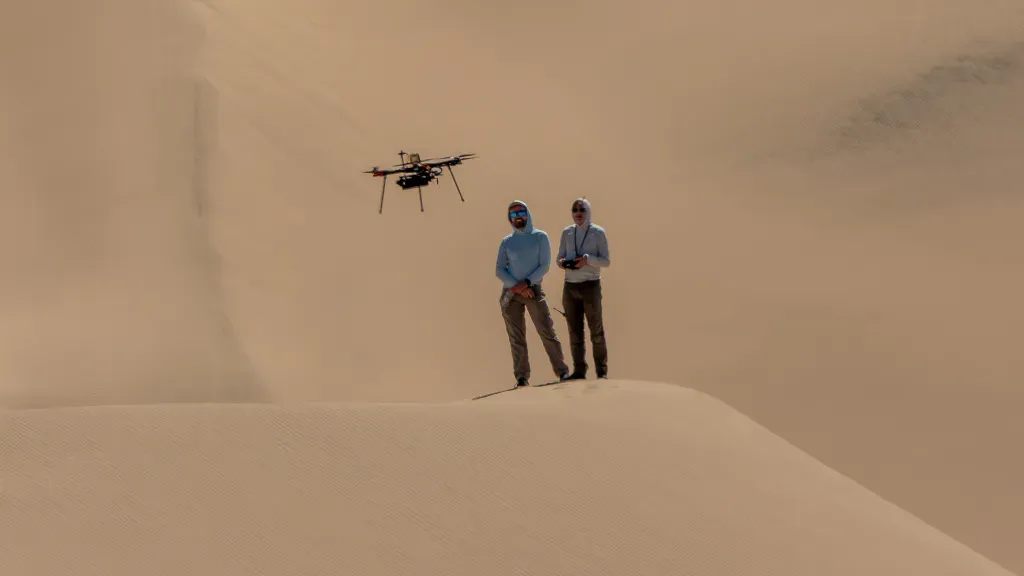
Engineers from NASA’s Jet Propulsion Laboratory took three research drones to Death Valley National Park and the Mojave Desert this year to develop and test navigation software meant for Mars. The work, called Extended Robust Aerial Autonomy, is one of 25 projects funded this year by NASA’s Mars Exploration Program to advance next-generation technologies for the Red Planet.
Tests focused on barren, featureless dunes that confounded the Ingenuity Mars Helicopter’s navigation on several late flights. "Ingenuity was designed to fly over well-textured terrain, estimating its motion by looking at visual features on the ground. But eventually it had to cross over blander areas where this became hard," said JPL researcher Roland Brockers.
The team aims to make future vehicles "more versatile and not have to worry about flying over challenging areas like these sand dunes." Field work took place at Death Valley’s Mars Hill and Mesquite Flats Sand Dunes in late April and early September, and the JPL team received only the third-ever license to fly research drones in the park.
Temperatures reached as high as 113 degrees Fahrenheit as technicians monitored flights beneath a pop-up canopy. Early results include findings on how different camera filters improve ground tracking and how new algorithms help drones land safely in cluttered terrain such as Mars Hill.
Key Topics
Science, Jet Propulsion Laboratory, Death Valley, Mojave Desert, Ingenuity, Mars Exploration Program