
Lake Unter-See: oxygen-rich Antarctic lake with cone-shaped stromatolites
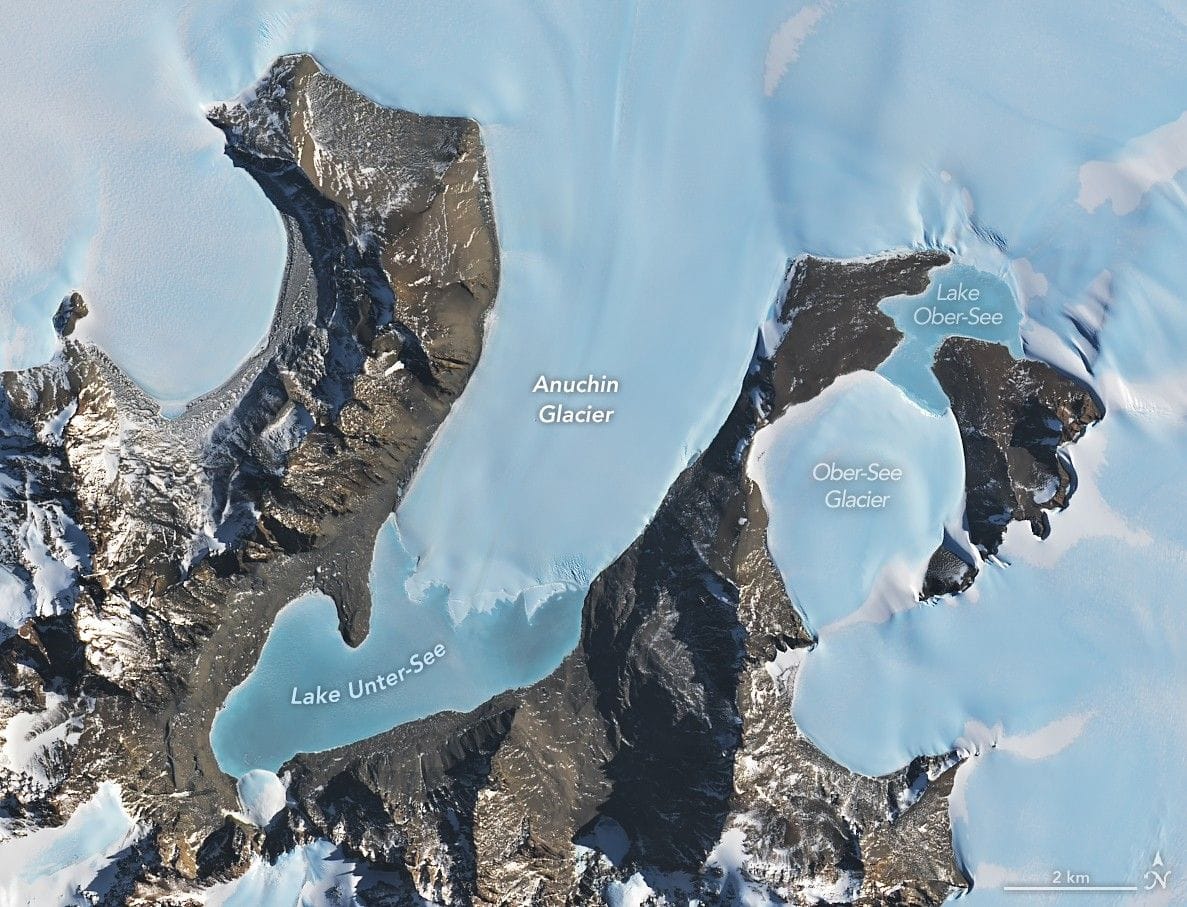
Lake Unter-See in Antarctica is sealed beneath several meters of ice and is notable for its unusual chemistry: exceptionally high dissolved oxygen, low dissolved carbon dioxide, and a strongly alkaline pH. Most of the lake’s water comes from seasonal melt draining from the margins of the nearby Anuchin Glacier, and sunlight penetrates the ice to warm the waters below even as cold surface air and strong winds limit surface melting.
The lake hosts large, conical stromatolites—layered microbial reefs built mainly by photosynthetic cyanobacteria that trap sediment and form calcium carbonate crusts. Those microbial communities release oxygen that becomes trapped under the ice, contributing to Unter-See’s elevated oxygen concentrations.
Discovered by Dale Andersen and colleagues in 2011, Unter-See’s stromatolites can tower up to half a meter, far taller than the few-centimeter forms found in some other Antarctic lakes.
Antarctica, Anuchin Glacier
lake unter-see, stromatolites, antarctica, anuchin glacier, cyanobacteria, elevated oxygen, alkaline ph, calcium carbonate, meltwater, dale andersen