
EPFL team makes thermal paper coatings from wood that show far lower hormone activity than BPA
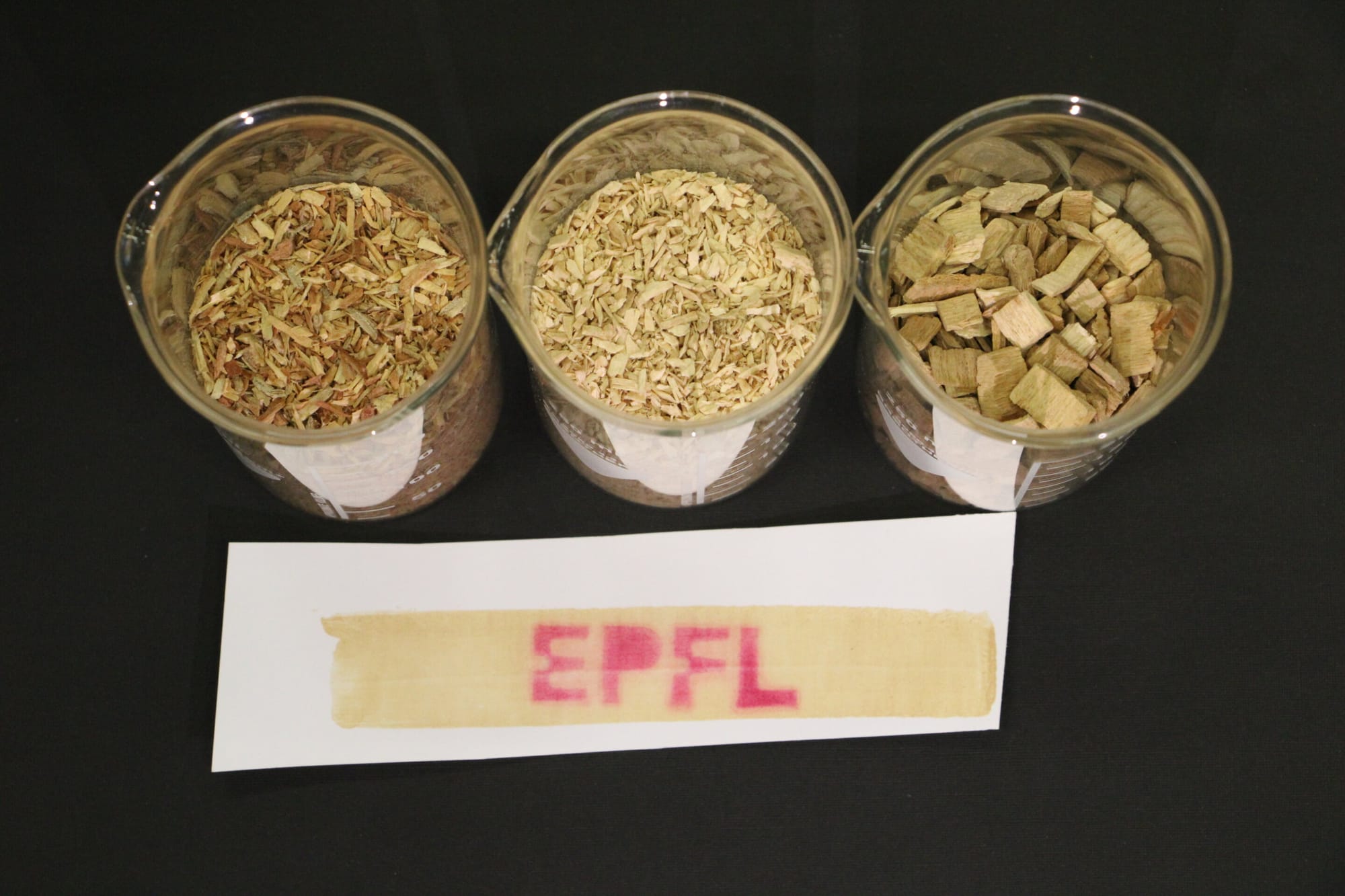
Scientists at EPFL report thermal‑paper coatings made from lignin and a sugar‑derived sensitizer that meet key performance requirements while showing much lower hormone‑like activity than common bisphenol developers. The researchers, in the groups of Jeremy Luterbacher and Harm‑Anton Klok, published the work in Science Advances.
They used a controlled extraction called sequential aldehyde‑assisted fractionation to produce light‑colored lignin polymers that can be mixed into thin thermal coatings without the dark, color‑absorbing groups that normally hamper printing. To enable color development at printing temperatures, the team added a sensitizer made from xylan‑derived diformylxylose rather than a petroleum‑based compound.
The resulting coatings produced clear printed images with color density in the range needed for commercial thermal paper and remained stable when stored near a window for months; printed logos stayed readable after a year. While image contrast was still below fully optimized commercial papers, the lignin formulations matched the performance of BPA‑based thermal papers in the tests reported.
Safety assays showed the lignin developers had estrogen‑like activity two to four orders of magnitude lower than BPA. The sugar‑based sensitizer showed no estrogenic or toxicity signals under the tested conditions. The work demonstrates that non‑edible biomass can be processed into safer thermal coatings using relatively simple steps.
Key Topics
Science, Epfl, Jeremy Luterbacher, Harm-anton Klok, Lignin, Diformylxylose