
Mercedes’ Drive Assist Pro demonstrated handling surface streets, lights and stop signs
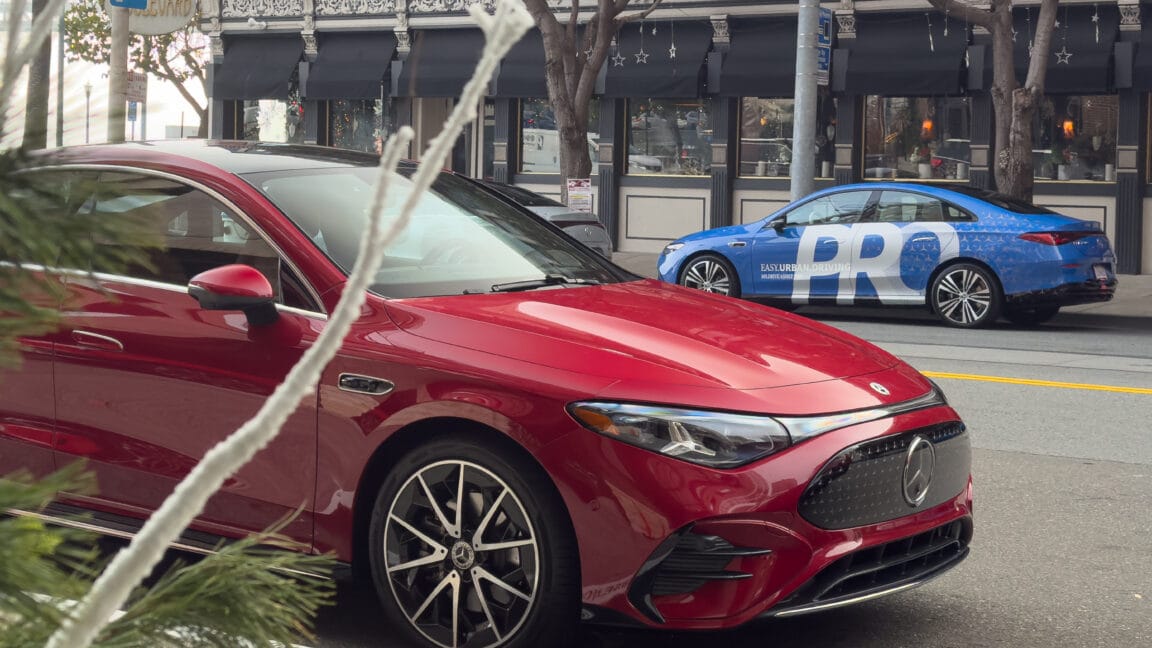
Mercedes’ Drive Assist Pro demonstrated the ability to handle surface streets, including reading traffic lights and stop signs and slowing for speed bumps, in an on-road demo where the engineer in the driving seat reportedly did not have to intervene during a 20-minute drive. The system uses a collaborative approach with the driver: light applications of the brake will slow the car a few miles per hour and the vehicle then resumes its original speed, similar to how cruise control responds to temporary throttle input.
Given a destination, Drive Assist Pro knows which lanes will be needed ahead of time, and the CLA drove at safe and legal speeds, handled construction zones and double-parked cars. Some demos were confused by human crosswalk attendants, and the car’s time to reach a complete stop at stop signs can be slow enough to irritate human drivers—"definitely not a California stop." Mercedes attributes the capabilities to the CLA being a software-defined vehicle with four powerful computers rather than many discrete black boxes, including an Nvidia Orin unit for perception and path planning.
Magnus Östberg, chief software officer at Mercedes‑Benz, said: "We completely elevated our autonomous driving stack. It is no longer on a rule-based stack. Now it uses an end-to-end AI model, 'which of course is giving you some basic advantages.
Key Topics
Tech, Mercedes-benz, Cla, Nvidia Orin, Magnus Östberg, California