
Moroccan cave fossils dated to 773,000 years fill gap in African record
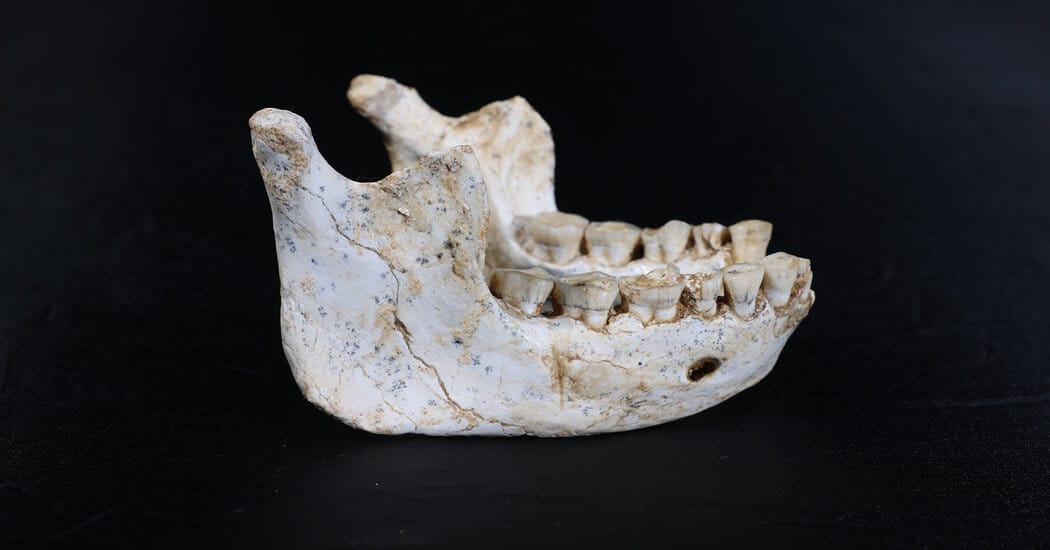
Researchers announced that hominin fossils recovered from Grotte à Hominidés, a cave in the Thomas Quarry near Casablanca, Morocco, have been dated to about 773,000 years and may help close a critical gap in Africa’s fossil record of human origins. The assemblage includes a nearly complete adult mandible, half an adult jawbone, a child’s jawbone, several vertebrae and isolated teeth.
The site, which may have been a den of prehistoric carnivores, sits in a coastal landscape that once supported wetlands, swamps and abundant wildlife including hippos, crocodiles, hyenas, jackals and panthers. The Moroccan bones are strikingly similar to fossils of Homo antecessor found at Gran Dolina in Spain and come from a period — roughly 600,000 to one million years ago — that is crucial for understanding when African lineages leading to Homo sapiens diverged from Eurasian groups that produced Neanderthals and Denisovans.
The lead author, Jean-Jacques Hublin, said the evidence supported a deep African origin for Homo sapiens and countered theories of a Eurasian origin; an independent scholar, Scott A. Williams of New York University, said the research demonstrated travel between northern Africa and southern Europe during the Middle Pleistocene.
The team obtained the age by high-resolution magnetostratigraphy, linking the sedimentary layer with the most recent major reversal of Earth’s magnetic field.
Key Topics
Science, Thomas Quarry, Casablanca, Morocco, Homo Antecessor, Jean-jacques Hublin