
NASA’s Arcstone Completes Technology Demonstration, Begins Extended Operations
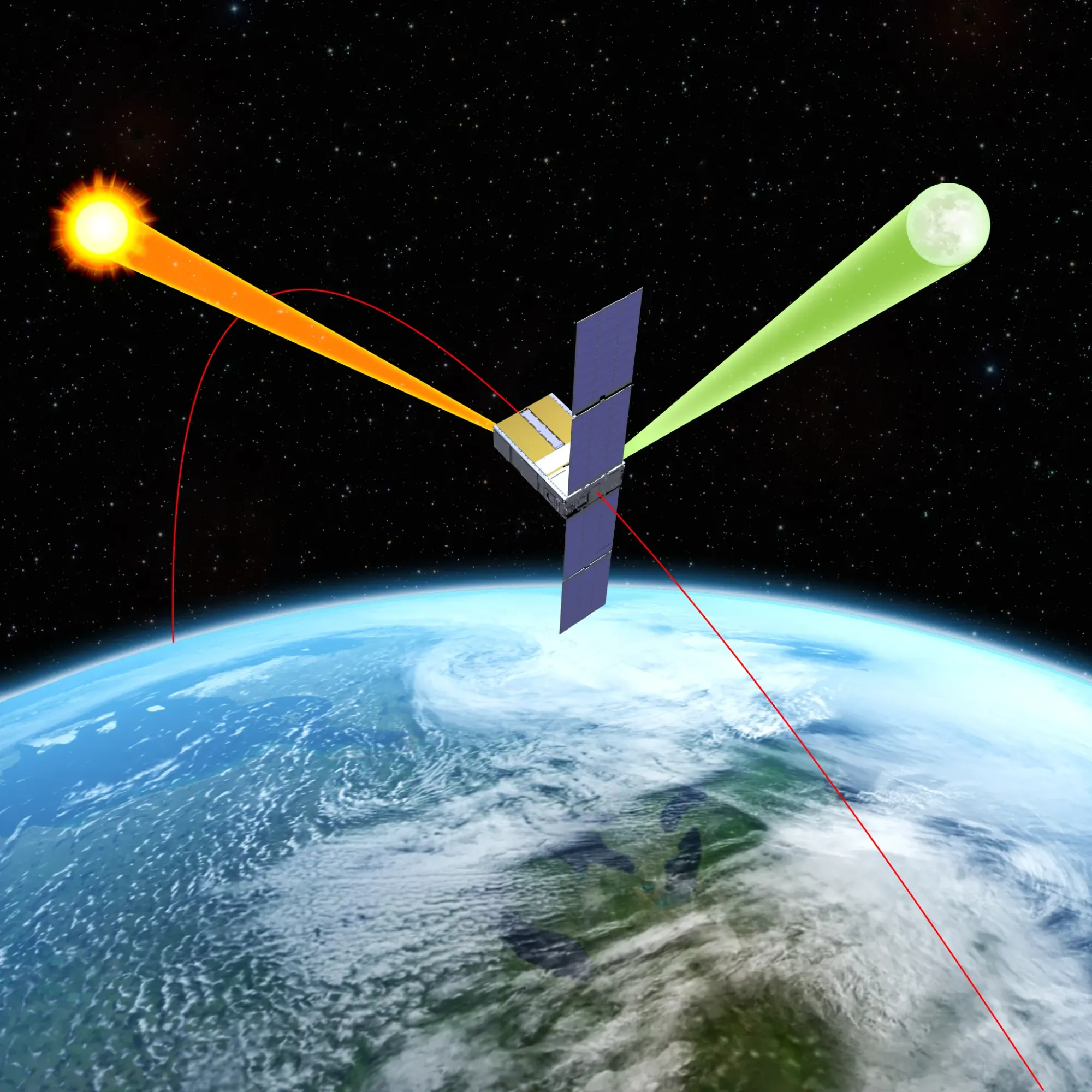
NASA’s Arcstone instrument successfully completed its technology demonstration and now begins extended operations. Arcstone launched June 23 on a SpaceX Transporter-14 from Vandenberg Space Force Base in California on a six-month mission to measure light reflected by the Moon. The mission is led by NASA’s Langley Research Center in Hampton, Virginia, and uses a specially designed spectrometer system.
Arcstone is the first on-orbit instrument solely dedicated to improving the accuracy of lunar calibration. Measurements of sunlight reflected off the Moon are the first step in creating a new lunar model for the calibration of Earth-orbiting sensors, including those that map the surface of the Earth for commercial, scientific, and consumer use such as the maps on cellphones.
"Since Arcstone is gathering measurements in space, the data it collects does not contain atmospheric effects that increase error, and operations are not dependent on having good weather," said Cindy Young, principal investigator for the mission. "This helps us acquire consistent and frequent lunar sampling." Young added that Arcstone has already collected more than 240 lunar observations and has successfully demonstrated the measurement concept on-orbit.
The science team’s next steps include processing and validating the raw data to assess accuracy.
arcstone instrument, nasa arcstone, arcstone technology demonstration, arcstone extended operations, spacex transporter-14 launch, vandenberg space force base, june 23 launch, langley research center, spectrometer system, lunar calibration, lunar model for calibration, sunlight reflected off moon, frequent lunar sampling, 240 lunar observations, processing and validating data, earth-orbiting sensor calibration, maps on cellphones, cindy young principal investigator, university of colorado boulder, u.s. geological survey, nasa goddard space flight center, resonon inc, blue canyon technologies, quartus engineering, earth science technology office, in-space validation program, six-month mission