
NASA Armstrong builds new subscale aircraft to expand flight research options
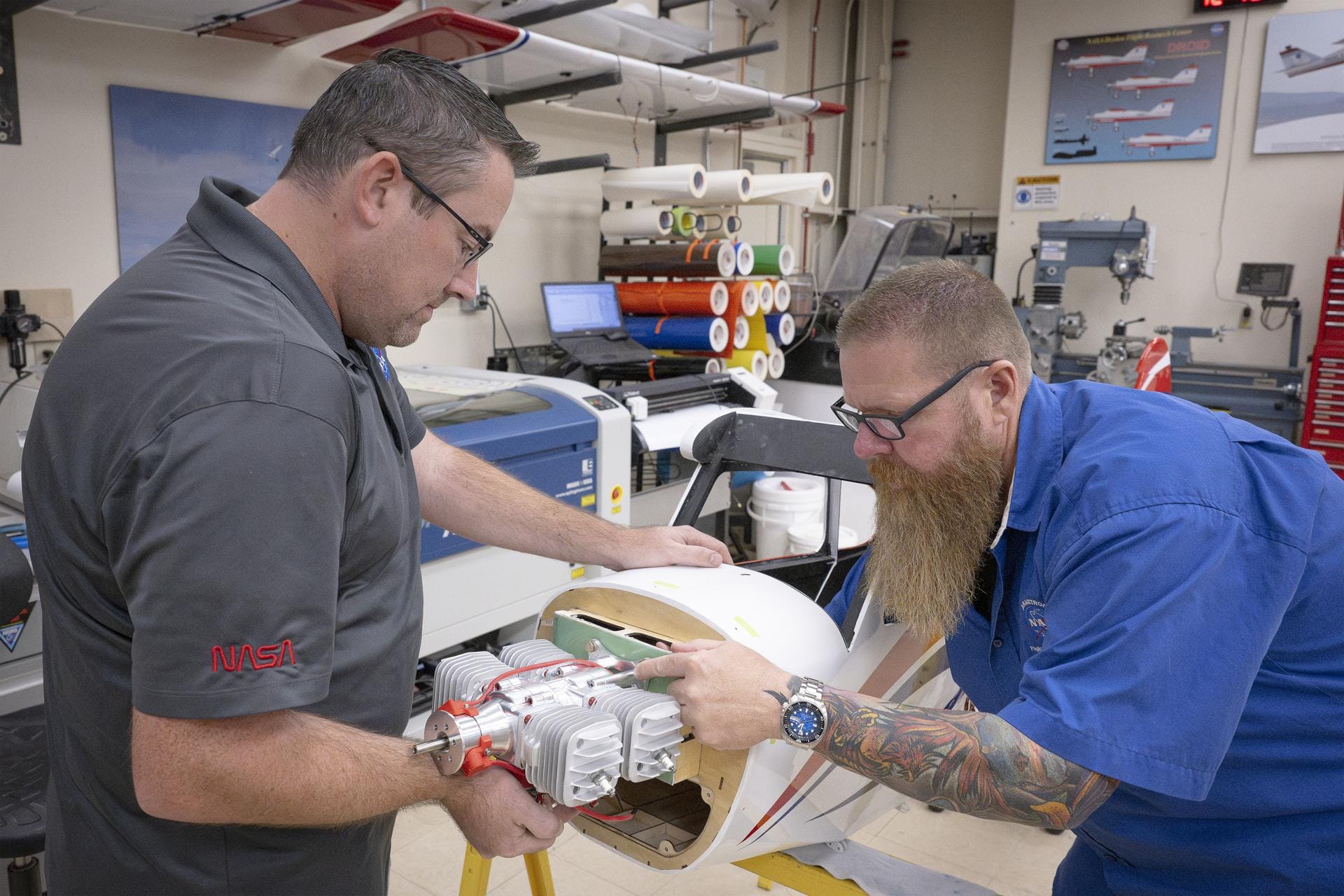
NASA’s Armstrong Flight Research Center in Edwards, California, is building a new subscale aircraft to support increasingly complex flight research and provide a more flexible, cost-effective alternative to crewed missions. The aircraft is being built by Justin Hall, chief pilot at NASA Armstrong’s Dale Reed Subscale Flight Research Laboratory, and Justin Link, a small uncrewed aircraft pilot.
They are replacing the center’s aging MicroCub with a more capable platform intended to save time and reduce costs. The new aircraft spans about 14 feet from wingtip to wingtip, measures nine-and-a-half feet long, and weighs about 60 pounds. The Dale Reed subscale laboratory uses small, remotely piloted aircraft to test aerodynamic concepts, technologies, and flight control systems, enabling rapid prototyping and risk reduction before moving to full-scale or crewed testing.
Hall and Link are modifying an existing subscale kit by adding a more powerful engine, an autopilot system, instrumentation, and a reinforced structure. The upgraded aircraft will allow more frequent and affordable flight experiments than crewed aircraft. One example of potential use is the Robust Autonomous Aerial Recapture project, which uses sensors and video with advanced programming to learn and adapt for mid-air capture.
Key Topics
Tech, Nasa Armstrong, Dale Reed Laboratory, Justin Hall, Justin Link, Microcub