
NASA balloon tests advance wildfire detection, smoke tracking and firefighter communications
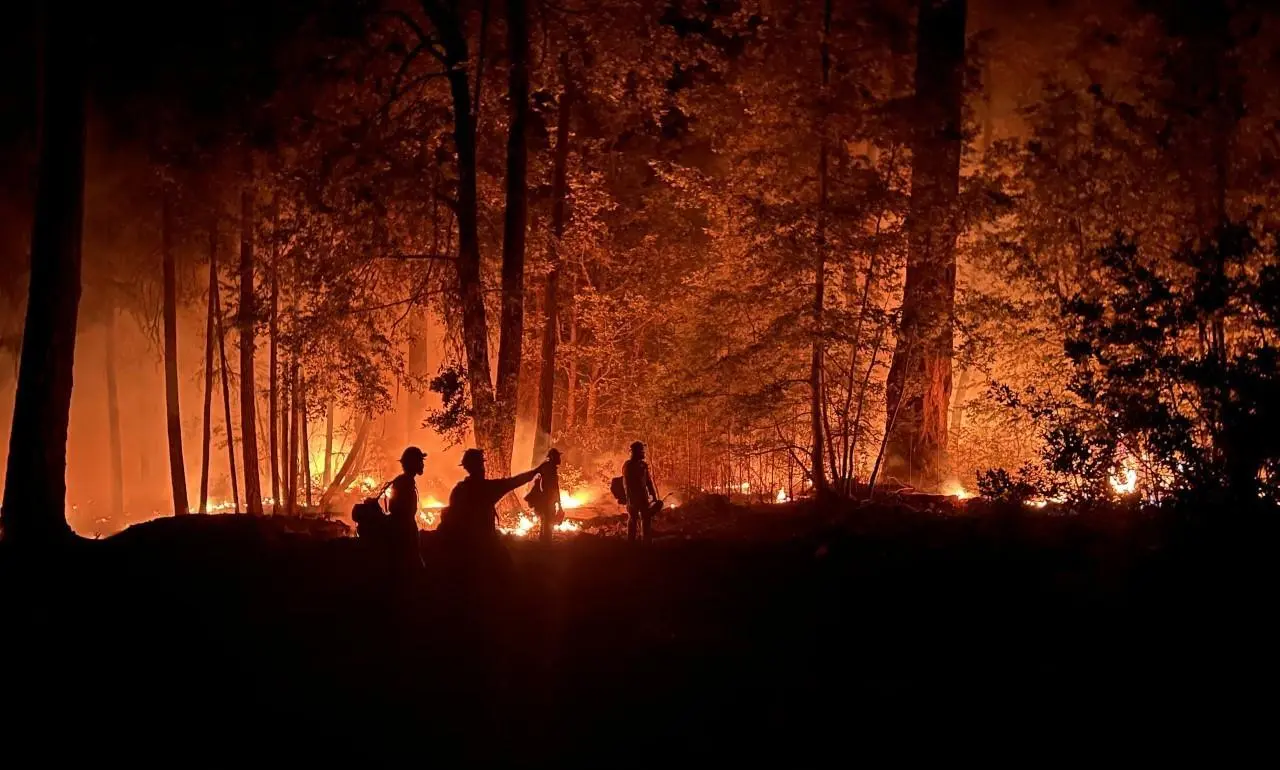
NASA’s Flight Opportunities program has supported a series of high-altitude balloon tests of technologies aimed at improving wildland fire detection, predicting smoke movement, and extending communications to firefighters in remote terrain. On April 23, 2025, a researcher team from Harvard University, Xiomas Technologies and NASA’s Ames Research Center flew a three-sensor payload during an eight-hour balloon flight over contained burns.
The sensors — a particle-size distribution sensor, a multi-band thermal imager that estimates burning intensity and smoke-producing emissions, and an Atmospheric Structure Investigation sensor that measures optical density — produced imagery intended to support data-driven forecasting of smoke transport; the program said the data may be useful to firefighting teams, public health officials and researchers, and could also support planetary atmospheric studies.
The STRATO system, developed by the U.S. Forest Service with Aerostar and NASA Ames, was flight tested beginning Aug. 4, 2024 aboard an Aerostar balloon over the West Mountain Complex fires in Idaho. STRATO pairs an infrared camera with communications hardware — a gimballed LTE payload plus Starlink and the Silvus broadband system — and flew for more than two weeks, providing directed signals that enabled real-time communications between firefighters and incident command and supplying imagery, including the first images of the Snag fire, the team reported.
Key Topics
Tech, Nasa, Flight Opportunities, High-altitude Balloon, Strato, Aerostar