
NASA completes high-speed taxi test of laminar-flow wing scale model
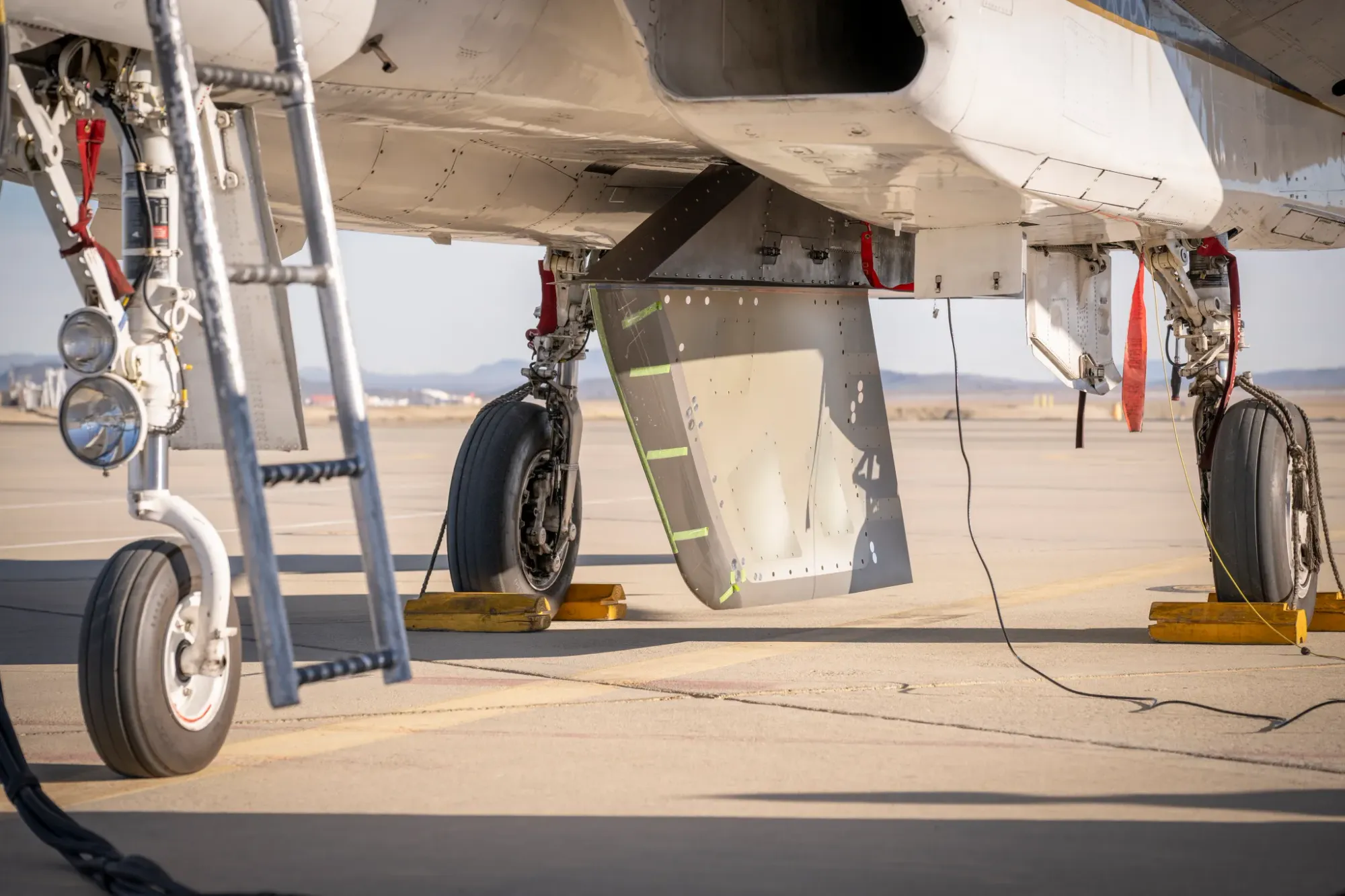
NASA researchers at Armstrong completed a high-speed taxi test of a scale model of a wing design meant to improve airflow and cut fuel use. On Jan. 12 the Crossflow Attenuated Natural Laminar Flow (CATNLF) test article reached about 144 mph, marking its first major milestone. The 3-foot-tall model resembles a fin mounted under the belly of one of NASA’s F-15B testbed jets but is actually a vertically mounted scale wing that lets researchers flight-test the design using an existing aircraft.
CATNLF aims to increase laminar flow and reduce drag; a NASA computational study from 2014–2017 estimated that applying the design to a large, long-range airplane such as the Boeing 777 could yield up to 10% annual fuel savings and could approach millions of dollars per aircraft each year, though quantifying exact savings is difficult.
"Even small improvements in efficiency can add up to significant reductions in fuel burn and emissions for commercial airlines," said Mike Frederick, principal investigator for CATNLF at NASA Armstrong. NASA says reducing drag depends on maintaining laminar flow in the thin boundary layer of air near a surface, and that turbulent flow and crossflow on swept, angled surfaces can prematurely end laminar flow.
The CATNLF concept was first developed by NASA’s Advanced Air Transport Technology project, with the initial shape and parameters set at Armstrong in 2019 and later refined at Langley.
Key Topics
Tech, Catnlf, Nasa Armstrong, Laminar Flow, Nasa Langley