
NASA analysis: La Niña limited global sea level rise to 0.03 inches in 2025
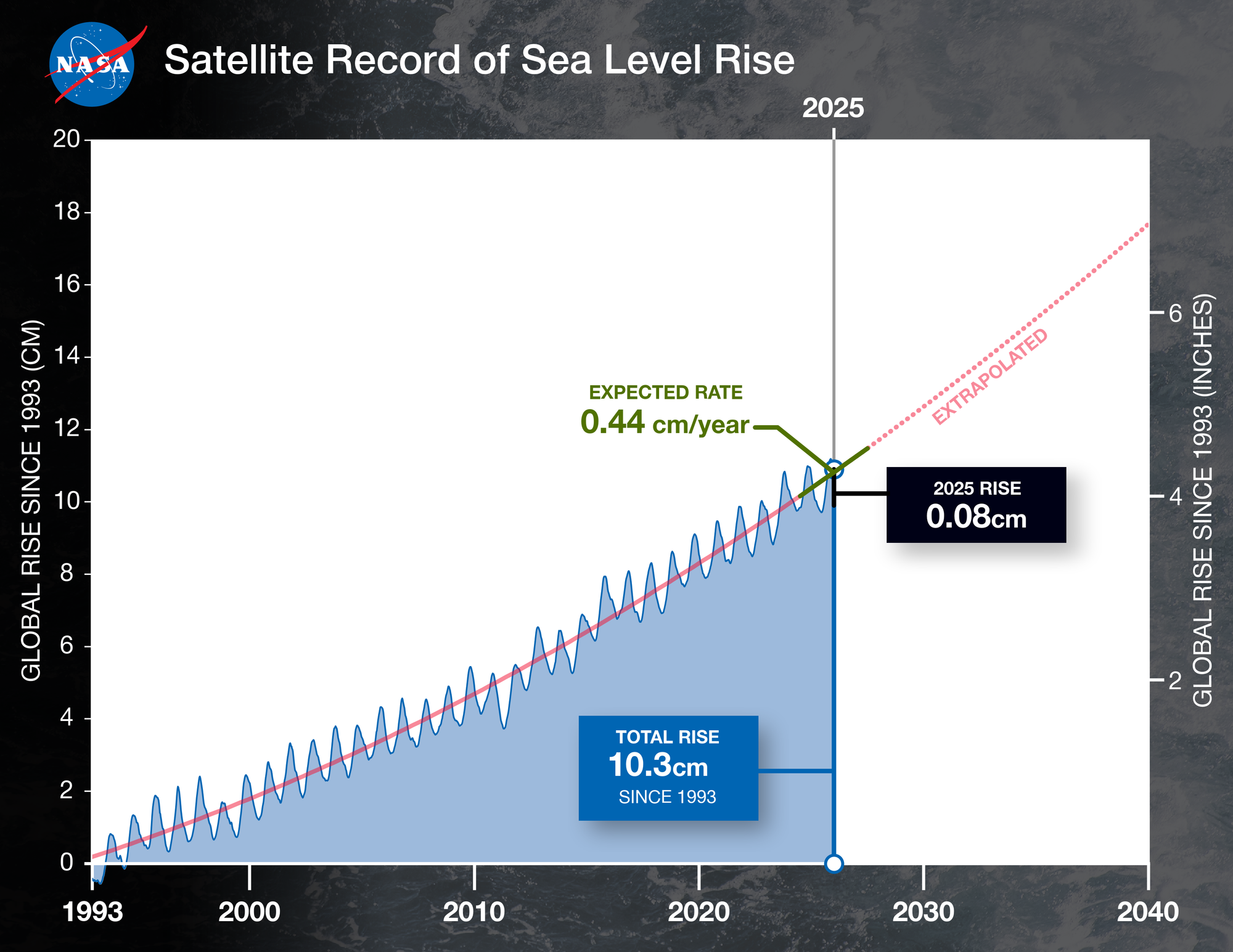
Researchers at NASA’s Jet Propulsion Laboratory say a NASA analysis found the average height of Earth’s oceans increased by 0.03 inches (0.08 centimeters) in 2025, a rise the analysis attributes in part to a La Niña that limited sea level increase that year. The 2025 increase was smaller than the 0.23 inches (0.59 centimeters) recorded in 2024 and below the long-term expected rate of 0.17 inches (0.44 centimeters) per year based on the rise since the early 1990s.
The analysis notes that the multi-decade trajectory of global mean sea level has more than doubled over three decades; a dotted line in the report projects future rise. The report explains that years with lower-than-average sea level rise have usually coincided with La Niñas. La Niña cools the eastern Pacific Ocean and often brings heavy rainfall to equatorial portions of South America.
The La Niña that began in 2025 and extended into early 2026 was relatively mild but delivered extra precipitation to the Amazon River basin, shifting water from ocean to land and temporarily lowering sea level. NASA’s analysis used more than 30 years of satellite observations from a series of five international satellites, beginning with the U.S.-French TOPEX/Poseidon mission launched in 1992 and continuing through the Sentinel-6 Michael Freilich mission launched in November 2020, which is the current reference satellite for sea level measurements.
nasa, jet propulsion laboratory, la niña, amazon river basin, global mean sea level, sea level rise 2025, satellite sea level measurements, topex/poseidon mission, sentinel-6 michael freilich, sentinel-6b launch, el niño-southern oscillation, sea level projections