
NASA’s StarBurst completes thermal and vibration tests, moves to calibration
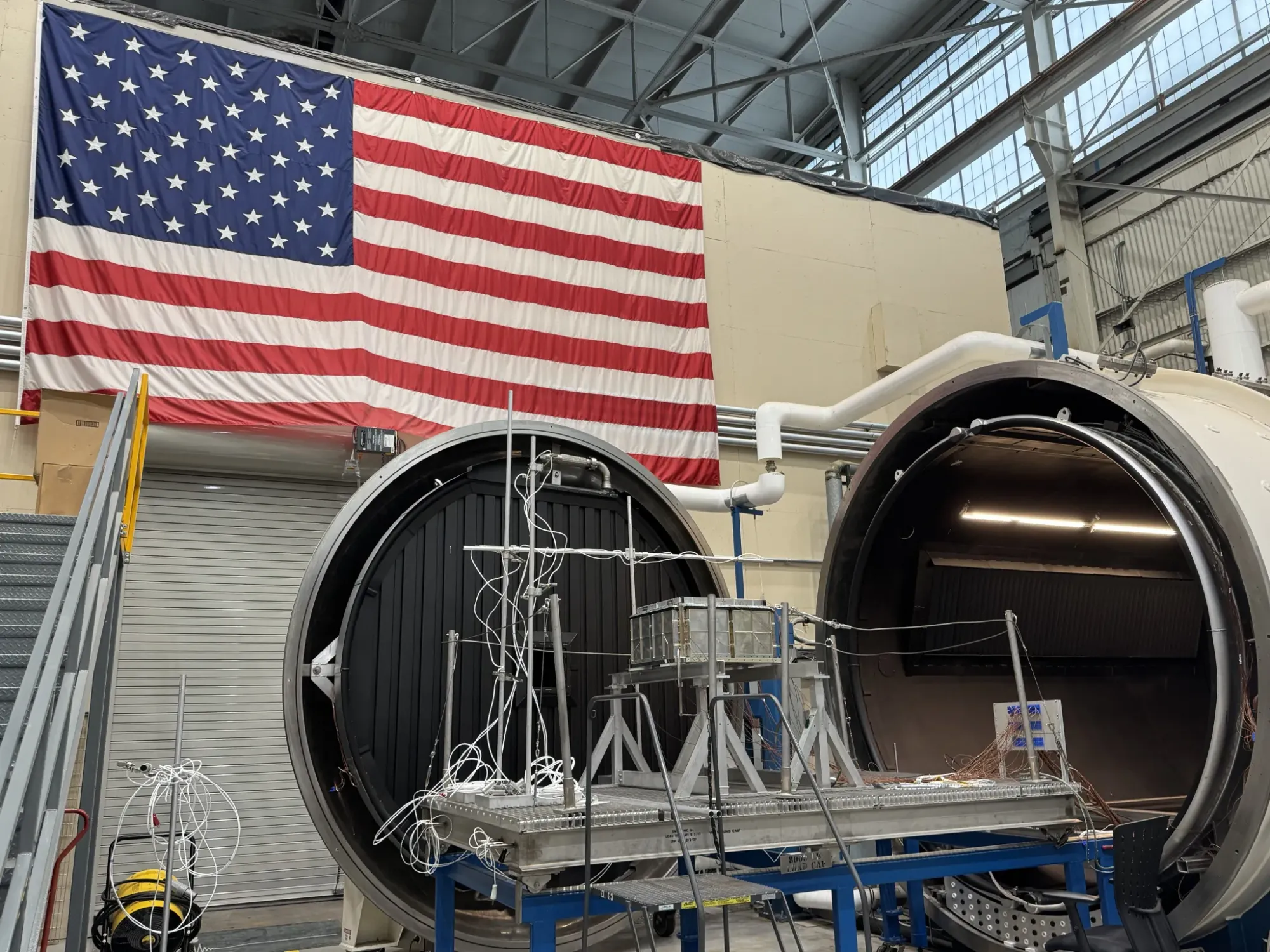
NASA’s StarBurst instrument has finished integration in Canada and rigorous thermal and vibration testing at the agency’s Marshall Space Flight Center in Huntsville, Alabama, and is now awaiting instrument calibration. “NASA’s StarBurst mission is ready for its next stage of assembly and is one step closer to flight,” said Daniel Kocevski, principal investigator at NASA Marshall.
StarBurst arrived at Marshall in March 2025 and underwent nonstop thermal testing in a vacuum chamber 24 hours a day for 18 days, as well as flight vibration testing. Technicians placed radioactive material into the vacuum chamber so the instrument could detect gamma-ray signals during tests.
Teams also ran thermal balance testing to simulate the hottest and coldest space conditions and completed a 24-hour bake-out to remove unwanted gases. The small satellite is designed to detect the initial emission of short gamma-ray bursts, indicators of neutron star mergers and sites where most heavy metals such as gold and platinum are formed.
The mission carries 12 crystal detector units as its main gamma-ray system. NASA says StarBurst is expected to find up to 10 such bursts per year; to date a joint detection of gravitational waves and gamma-rays has been observed only once. Marshall shipped the instrument to the Space Flight Laboratory at the University of Toronto in August, and Marshall staff helped integrate it with the spacecraft bus in early September.
Key Topics
Science, Starburst, Marshall Center, Space Flight Laboratory, Short Gamma-ray Bursts, Neutron Star Mergers