
Northern lights streaked skies in major solar storm and have long inspired humans
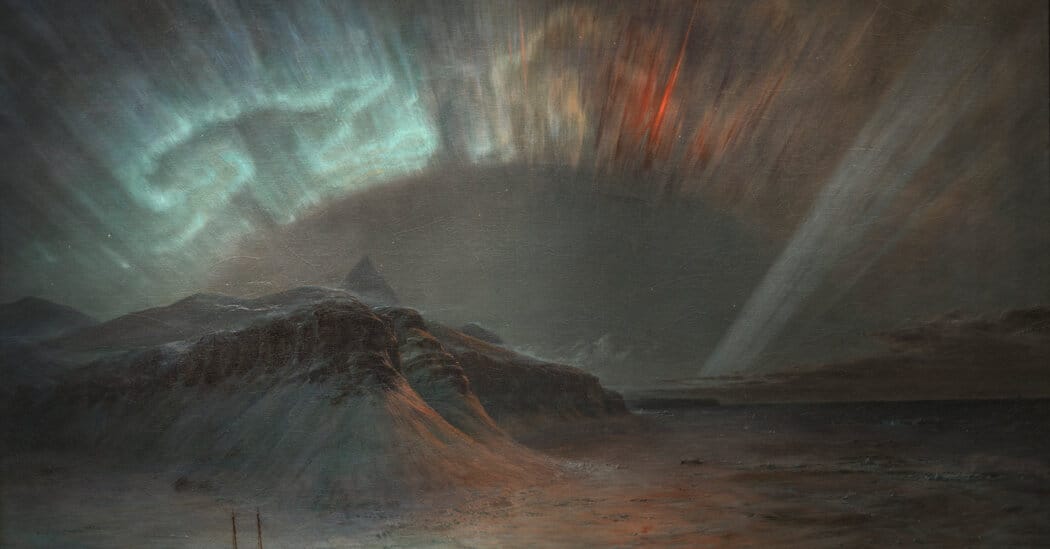
The northern lights dazzled overnight during one of the largest solar radiation storms in decades, streaking the skies of North America and Northern Europe with bursts of red, green and orange. Scholars have identified portrayals of the aurora borealis in prehistoric cave paintings, in the Bible and other ancient texts, and across myths and legends.
Drawings from the Cro-Magnon era, about 30,000 years ago, have been interpreted as depictions of the lights. The Inuit, Harald Falck-Ytter wrote, believed the lights were torches ignited by the spirits of the dead to guide new spirits to a higher realm; an Indigenous Siberian tribe saw them as a sign of imminent childbirth; and a Chinese record from 2,600 B.C.
linked a bright northern light to an imperial pregnancy. The lights also captivated the ancient Greeks and Romans: Plutarch described "a flaming cloud that did not rest in one place but moved along with intricate and regular movements," and Seneca noted variation in their colors. In the early 17th century Galileo named the phenomenon aurora borealis after the Roman goddess of dawn.
Edmond Halley later linked the lights to the Earth’s magnetic field and, after expecting to die without seeing them, finally observed them in 1716. Scientists since have concluded that charged particles from the sun, carried by the solar wind, collide with gases in Earth’s upper atmosphere and are guided toward the poles by the planet’s magnetic field.
Key Topics
Science, Aurora Borealis, Solar Storm, North America, Northern Europe, Cro-magnon