
How onchain privacy could change in 2026: industry forecasts
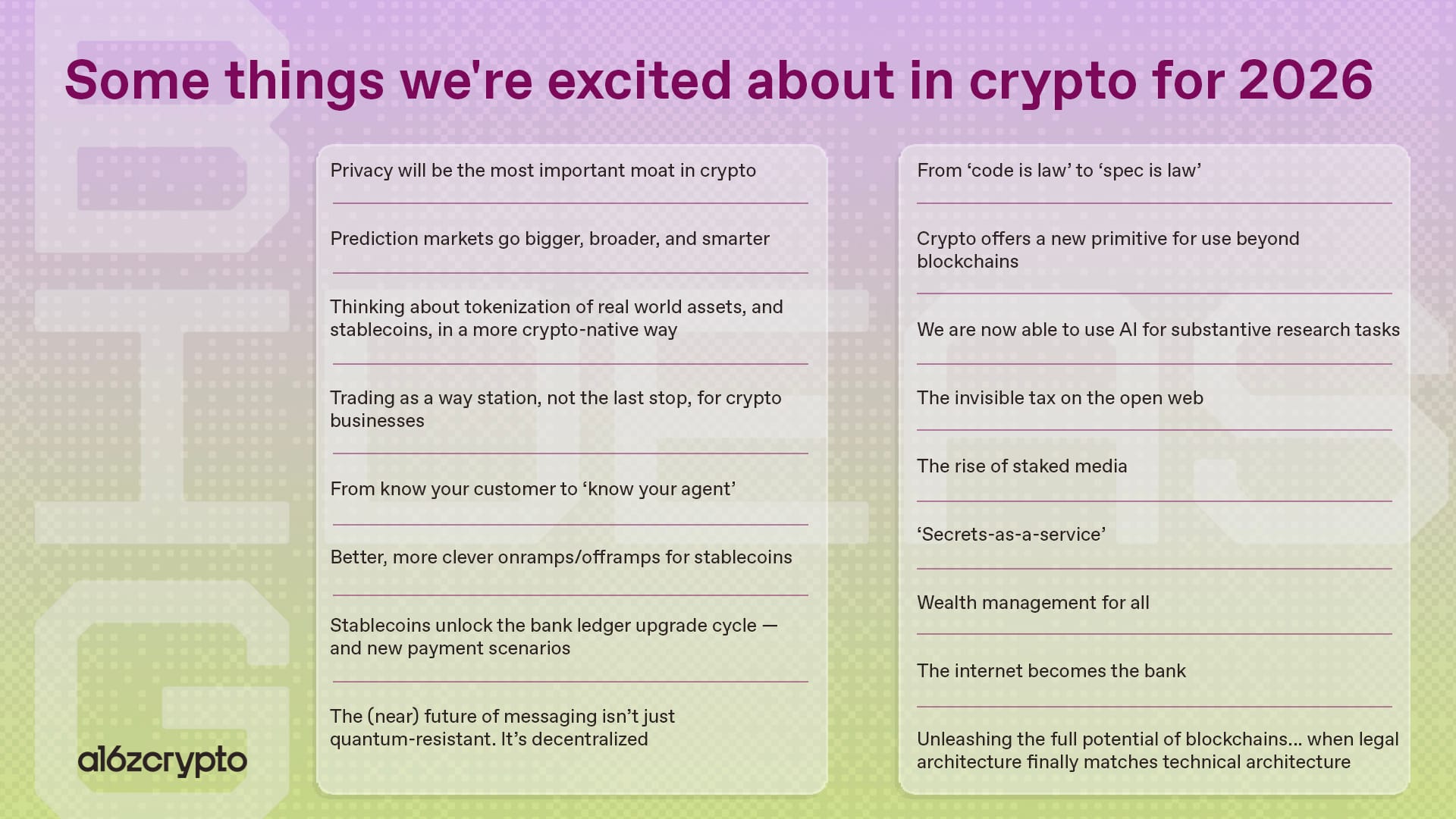
Privacy on public blockchains moved from concept to momentum in 2025, and industry participants expect the shift to accelerate in 2026. Market interest and technical activity last year set the stage: Zcash, one of the early privacy-focused cryptocurrencies, rose more than 600% in 2025. Major smart-contract platforms including Ethereum and Solana announced initiatives to add privacy capabilities, while startups advancing zero-knowledge proofs (ZK) and fully homomorphic encryption (FHE) continued to attract attention.
Influencers and practitioners framed the momentum succinctly: Mert Mumtaz, chief executive of Solana infrastructure firm Helius, labeled the moment “Privacy Szn.” For many observers, privacy is now a practical requirement for broader institutional engagement because corporations generally prefer not to operate on fully transparent ledgers.
Industry leaders and builders offered four linked predictions for 2026 that emphasize pragmatism, compliance, and operational readiness. Their views highlight different corners of the privacy stack — from payments rails to protocol design and deployment challenges.
- Privacy will become more practical. Bobbin Threadbare, co-founder of Miden, argued that privacy is not a binary state. Absolute privacy and complete transparency each pose real problems: privacy protects honest users but can also be exploited by malicious actors. Threadbare expects wider acceptance of tradeoffs that limit privacy in narrowly defined contexts to reduce threats. One suggested approach is conditional privacy: restrict privacy for high-risk transactions while retaining strong privacy properties for lower-risk activity, mirroring how cash functions in the physical world.
- The year of private stablecoins. Khushi Wadhwa, head of business development at Predicate, predicted that private stablecoins will emerge as a core layer of onchain payment infrastructure. She foresees stablecoins with configurable privacy by default, using selective disclosure and transaction amount obfuscation and, in some implementations, full sender-receiver anonymity. Development will be driven by settlement needs: enterprises require confidentiality for commercial relationships and treasury operations, and retail users increasingly reject fully transparent payment rails. Wadhwa also emphasized that these systems are expected to incorporate policy controls enabling compliance without discarding baseline privacy, which could shift definitions of “compliant payments” onchain.
- Privacy will be industrialized. Paul Brody, global blockchain leader at EY, described 2026 as the start of privacy’s industrialization onchain. Multiple implementation efforts are moving from testnets toward production, with projects such as Aztec, Nightfall, Railgun and COTI among those cited. Brody noted practical headwinds: consumer wallets little support privacy capabilities today, and approaches to regulatory compliance remain inconsistent across providers. He suggested that scaling privacy at the consumer and institutional level will require resolving wallet integration and compliance frameworks, but that the sector is shifting from theoretical prototypes to deployed solutions.
- Threat-resistance will become normal. Wei Dai, research partner at 1kx, expects threat-resistant onchain privacy — systems that make data tampering and illicit use substantially harder — to become the accepted default. Dai argued that projects will move away from idealized privacy promises and toward pragmatic designs that hinder misuse, such as laundering stolen funds. He outlined two families of approaches. “Throttled” privacy imposes operational limits like deposit delays and constrained in-protocol transfers. “Responsible” privacy keeps velocity unrestricted but couples privacy with an information custodian that can trace transaction graphs if a hack or other malicious event occurs.
Taken together, these forecasts suggest a common trajectory: privacy technology will be deployed with built-in mechanisms for compliance and abuse mitigation, emphasizing practical tradeoffs over abstract guarantees. That pattern reflects tensions articulated throughout 2025 — strong technical progress on ZK and FHE, market signals such as Zcash’s price performance, and platform-level privacy initiatives — and a growing emphasis on operational readiness.
Industry participants also highlighted where work remains. Wallet support for privacy features is uneven, and market participants have not converged on a single approach to regulatory compliance. Brody noted that scale will depend on resolving those issues, and other contributors described specific mechanisms — from conditional privacy to custodial tracing — that remain to be standardized or stress-tested in production environments.
For enterprises and payment providers, the predictions imply a future where onchain settlements can be confidential by design, but subject to policy controls that enable oversight. For developers and protocol teams, the near-term focus will be integrating privacy primitives into consumer-friendly tooling and balancing defensive measures against the risk of regulatory friction.
As builders move from proof-of-concept work to real-world deployments, the coming year will likely determine whether privacy features achieve broad adoption or remain specialist capabilities used primarily in niche applications. The conversation in 2026 appears set to be less about absolute privacy and more about how to operationalize privacy in ways that serve users, institutions and regulators simultaneously.
Key Topics
Privacy On Public Blockchains, Private Stablecoins, Zero-knowledge Proofs, Fully Homomorphic Encryption, Conditional Privacy, Throttled Privacy, Responsible Privacy, Privacy Industrialization, Onchain Compliance, Privacy-enabled Payment Rails, Wallet Privacy Integration, Zcash 2025 Rally, Enterprise Onchain Confidentiality