
Poison residues found on 60,000-year-old arrow tips in South Africa
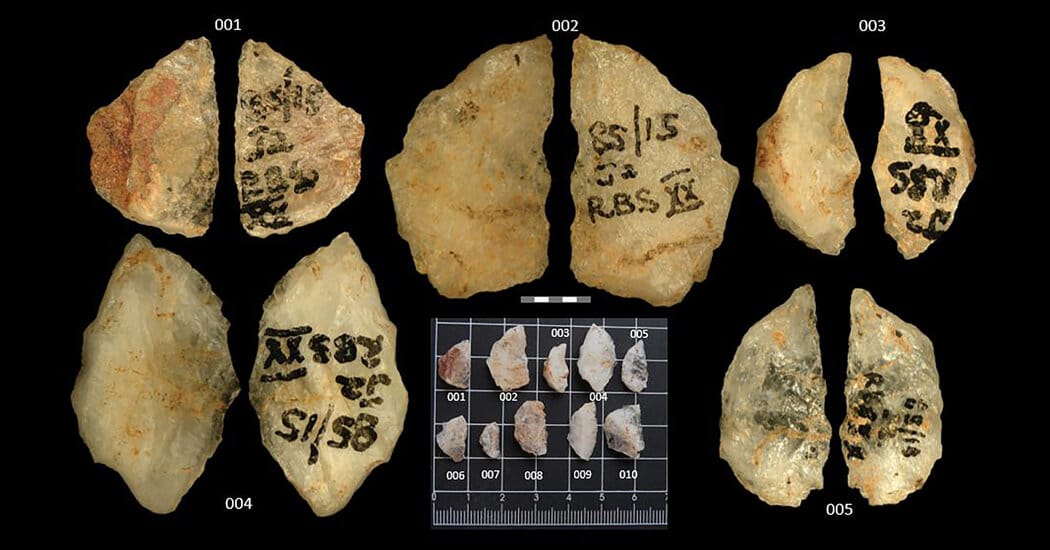
Researchers led by Sven Isaksson of Stockholm University have identified poison residues on 60,000-year-old arrow tips recovered from the Umhlatuzana Rock Shelter in eastern South Africa. Chemical and molecular analyses of quartz-backed microliths revealed two toxic compounds, buphanidrine and epibuphanisine, most likely from Boophone disticha, known as the Bushman’s poison bulb.
The arrow points, originally discovered in 1985 and lodged in sediments estimated to be 60,000 years old, are unusually small, which the team said suggests they may have been made to deliver poison efficiently into an impact wound rather than to inflict blunt-force injury. The next-oldest trace of poison use had been dated to 35,000 years ago, making these tips the earliest evidence so far by a wide margin; the study was published in Science Advances.
Isaksson said the finding “is a big leap” and added, “It might be an even earlier practice. This is just the earliest evidence so far.” He and others argued the discovery reinforces evidence that early Homo sapiens had cognitive abilities nearing those of modern humans, noting the knowledge of plants, dosages and weapon crafting required.
Felix Riede called the result a “spectacular finding” and said it shows poison signatures can be extracted from very ancient residues; Michelle C. Langley urged reexamination of other sites and collections as techniques improve.
Key Topics
Science, Sven Isaksson, Umhlatuzana Rock Shelter, South Africa, Boophone Disticha, Buphanidrine