
Pleistocene ostracod fossils in Qaidam Basin point to ancient East Asian bird flyway
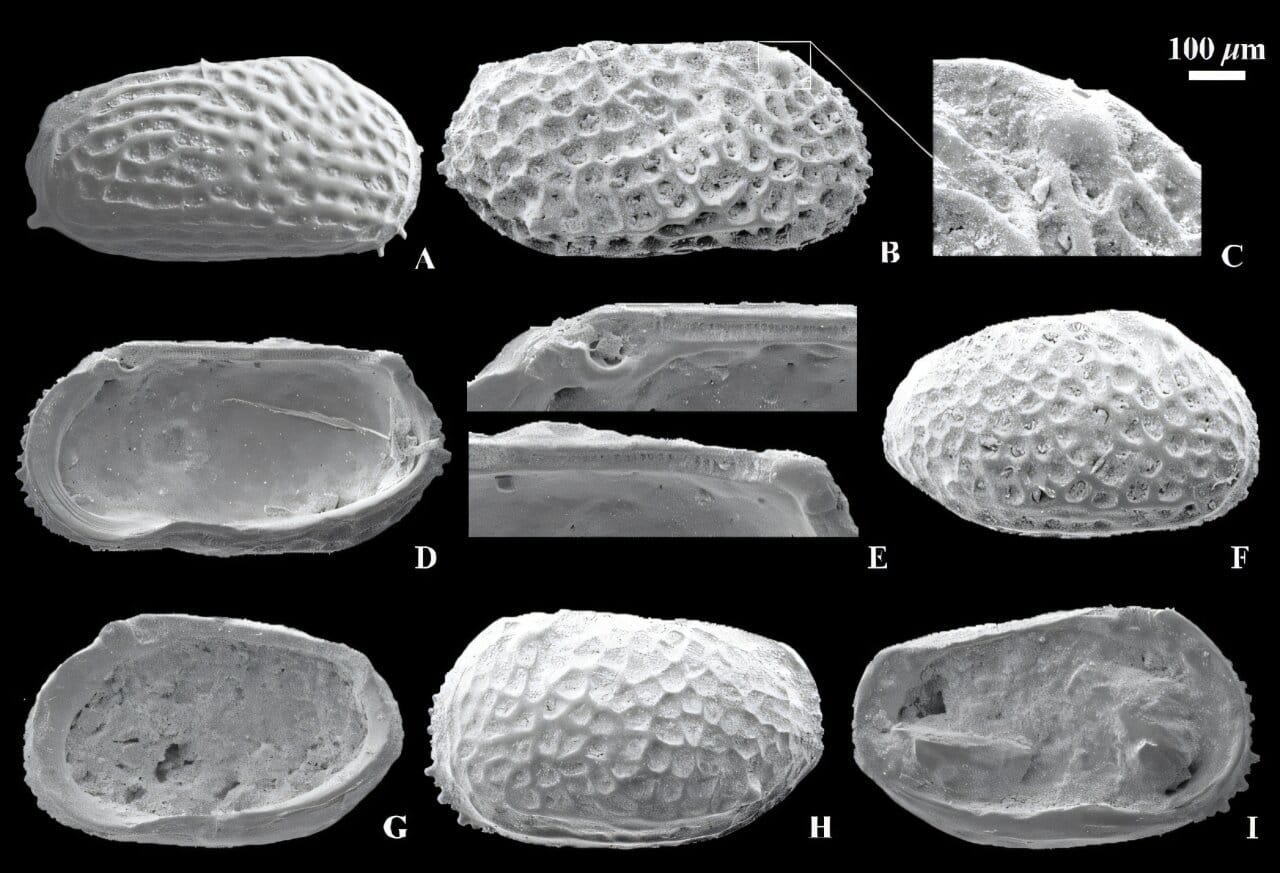
A research team led by Associate Professor Wang Yaqiong of the Nanjing Institute of Geology and Paleontology (NIGPAS), with domestic and international colleagues, has for the first time documented two marine ostracod species in Pleistocene lacustrine deposits of the Qaidam Basin.
The fossils were identified as Bicornucythere bisanensis s.l. and Pistocythereis bradyformis. They had previously been misidentified as the non-marine ostracod Cytherissa qaidamensis.
Both the fossil and living records show these species are predominantly coastal in the western Pacific, occurring in China, South Korea, Japan and the Russian Far East across about 20°–43° N latitude.
The presence of marine ostracods in terrestrial Pleistocene deposits far from any modern coastline suggests long-distance dispersal into the Qaidam palaeo-lake, likely carried by migratory waterfowl over more than 2,000 km across continental interiors.
The finding supports a potential role for migratory birds in marine ostracod long-distance dispersal and implies that the East Asian or East Asia–Australasia migratory flyway—one of the world's major modern bird routes—was already established by the Pleistocene, with Qaidam Lake as a possible stopover.
The results were published in Palaeoentomology (2025). DOI: 10.11646/palaeoentomology.8.6.2.
Key Topics
Science, Bicornucythere Bisanensis, Pistocythereis Bradyformis, Qaidam Basin, Wang Yaqiong, Nigpas