
Researchers differ on whether Arctic warming is weakening the polar vortex
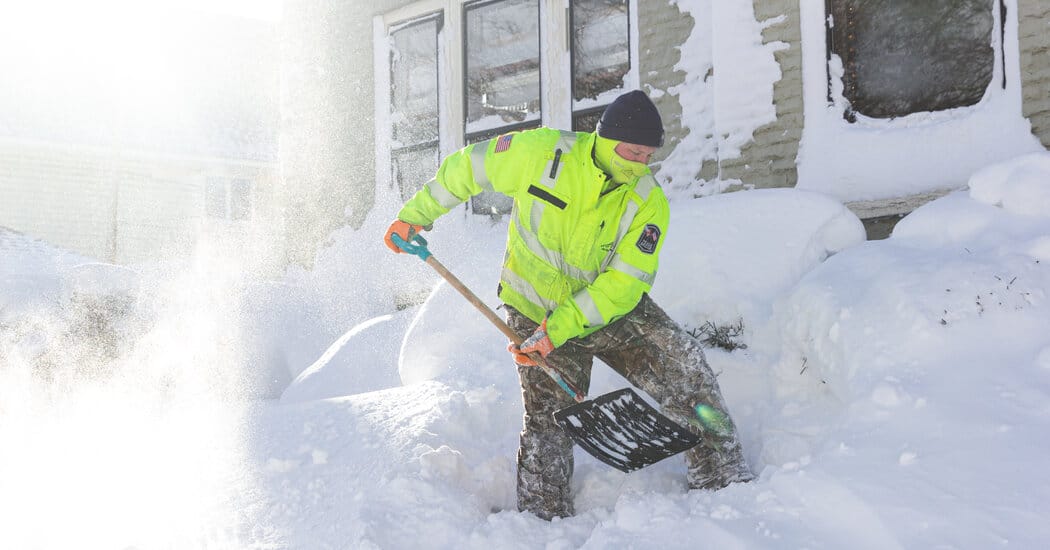
The polar vortex has stretched and allowed a mass of Arctic air to spill into North America this week, colliding with a warm, moist high-pressure system from California and producing freezing rain, ice and snow across much of the Midwest, Southern and Eastern United States. The polar vortex is a ribbon of high-altitude, fast-moving air that normally traps cold air as it circles the Arctic.
Occasionally it stretches into an oval shape, weakens and lets a blob of cold air move south; that stretching is what forecasters say is happening now. Judah Cohen, a research scientist at the Massachusetts Institute of Technology and coauthor of a study in Science, said the stretching has been linked to increased severe winter weather in the United States in the past decade.
Dr. Cohen said higher Arctic temperatures have led to melting sea ice in the Barents and Kara seas, allowing the ocean to feed more heat into the atmosphere and set up patterns that can produce bursts of extreme cold in North America. He said the occurrence of a weak polar vortex is increasing in frequency, while strong or circular vortices are happening less often.
Not all scientists agree that Arctic warming is driving these changes.
Key Topics
Science, Polar Vortex, Arctic Warming, Barents Sea, Kara Sea, Judah Cohen