
Risks of Human Spaceflight
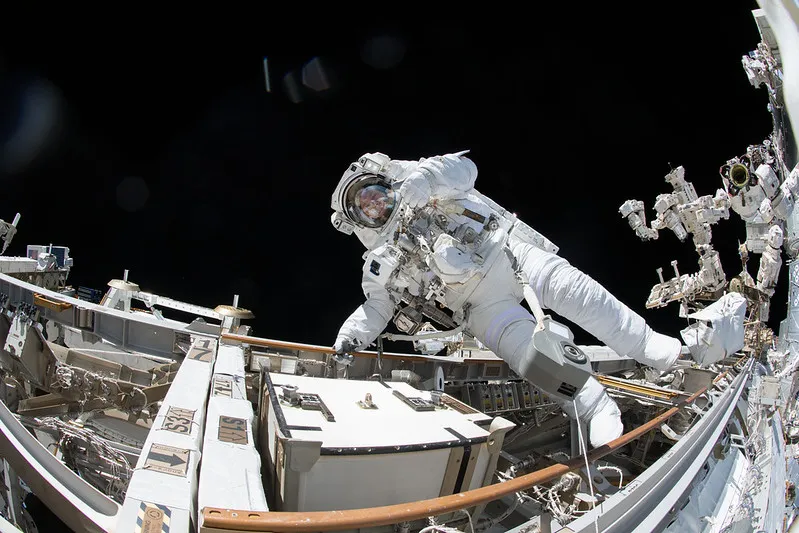
The Human Research Program has identified several specific risks to human health associated with five hazards of spaceflight. The effects of these risks vary depending on destination—low Earth orbit, the Moon, or Mars—and researchers are studying each area in detail.
Physiological risks include altered immune responses, where spaceflight stresses can awaken inactive viruses and cause rashes and other symptoms; altered sensorimotor and vestibular function that can produce motion sickness, coordination problems, and dizziness; cardiovascular adaptations from weightlessness that change circulation and heart and vessel function; decompression sickness when dissolved nitrogen can form bubbles during transitions to lower-pressure suits; and an elevated risk of mild hypoxia linked to procedures intended to prevent decompression sickness.
human spaceflight, human research, immune responses, viruses, sensorimotor, vestibular function, motion sickness, cardiovascular adaptations, decompression sickness, hypoxia