
Russia fits Molniya strike drones with fiber-optic tethers to avoid jamming
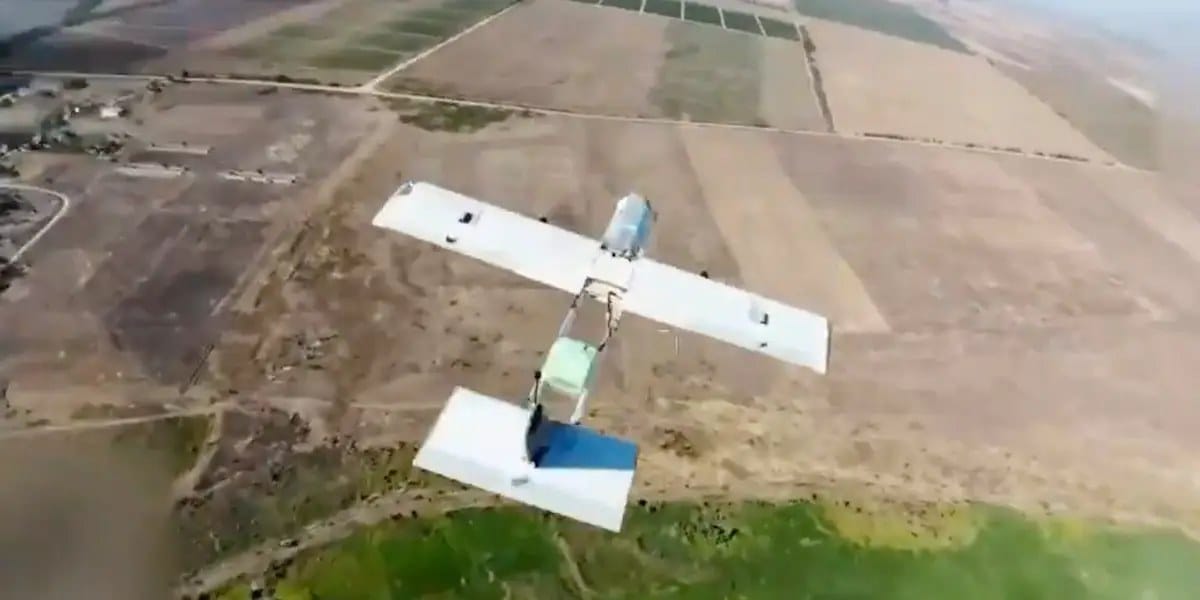
Russia has begun using fiber-optic cables to control its fixed-wing Molniya strike drones, making them effectively immune to electronic jamming, Ukrainian drone expert Serhii "Flash" Beskrestnov said. He noted Moscow has operated tethered Molniyas on at least five occasions, after fiber-optic links were already common on smaller FPV quadcopters.
The Molniyas have ranges of roughly 30 to 60 miles and have been seen on strike missions near the front line in eastern Donetsk. Beskrestnov said the tethered connection preserves video and control at the cost of reduced speed. The US military reported Russia began using fiber-optic Molniyas in late 2025, saying the tether "provides immunity to electronic jamming and maintains high-quality video transmission, although it reduces both operational range and payload capacity compared to standard models." A spool carrying about 25 miles of cable can limit payload to roughly 10 pounds, and a longer spool would further reduce what the drone can carry.
Russia, eastern Donetsk
russia, molniya, strike drones, fiber optic, tether, electronic jamming, fpv quadcopters, donetsk, payload, spool