
Seven-million-year-old Sahelanthropus shows anatomical evidence of bipedal walking
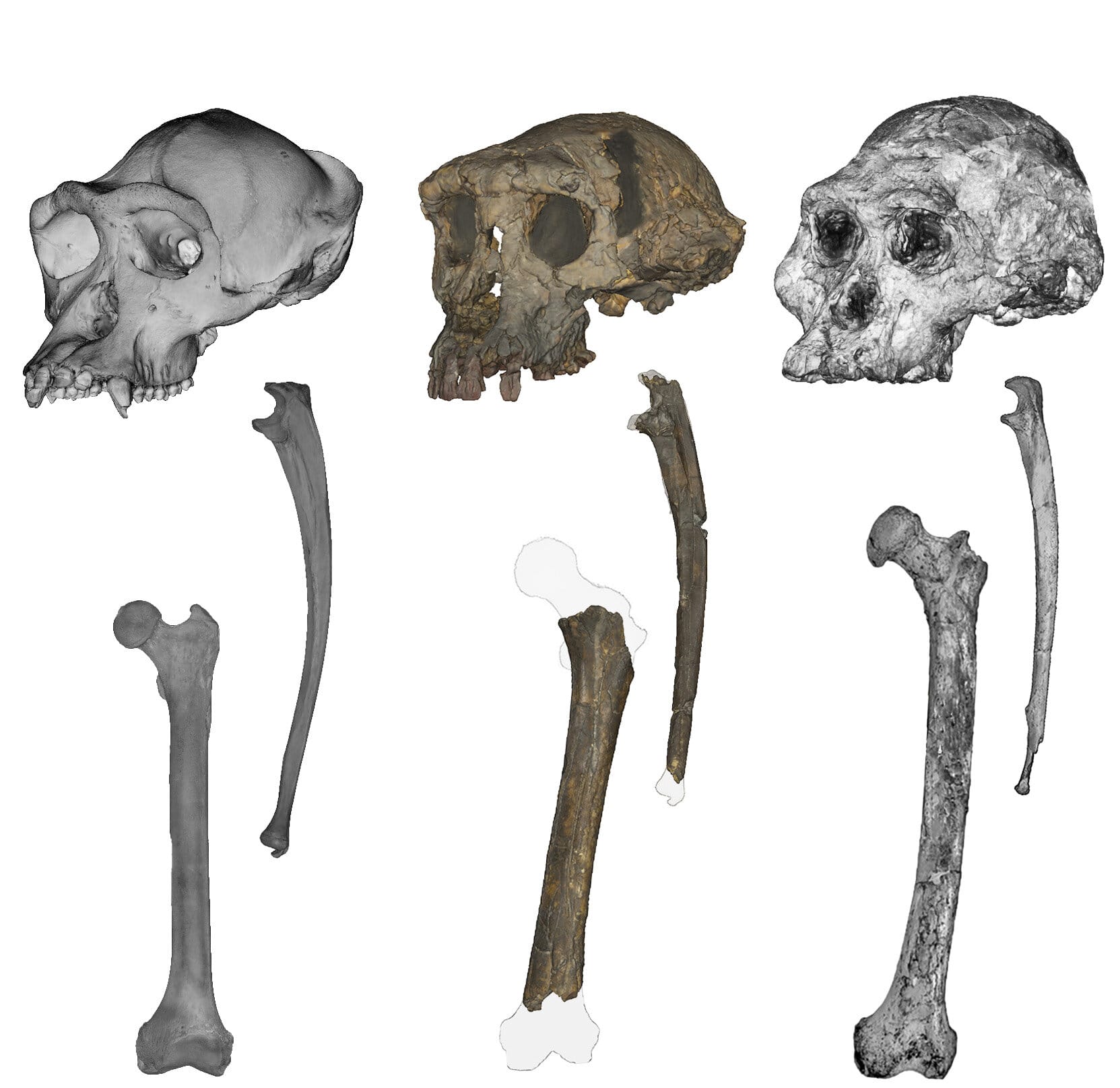
A new analysis of Sahelanthropus tchadensis fossils provides strong evidence the species could walk on two legs. Researchers identified a feature on the thigh bone found only in bipedal hominins and confirmed other traits linked to upright walking. The team used 3D geometric morphometrics and a multi-fold trait comparison with living and fossil species.
They identified a femoral tubercle—the attachment point for the iliofemoral ligament, a major ligament that links pelvis to femur—previously observed only in hominins. The study also affirmed earlier findings of femoral antetorsion within the range of hominins, which orients the legs forward for walking, and a gluteal muscle complex similar to early hominins that stabilizes the hips for standing and locomotion.
Researchers found Sahelanthropus had a relatively long femur compared with its ulna, a proportion closer to early hominins such as Australopithecus and distinct from modern apes, which have longer arms and shorter legs—further evidence of adaptation to bipedalism. "Sahelanthropus tchadensis was essentially a bipedal ape that possessed a chimpanzee-sized brain and likely spent a significant portion of its time in trees, foraging and seeking safety," said Scott Williams of New York University, who led the research.
Key Topics
Science, Sahelanthropus Tchadensis, Femoral Tubercle, Iliofemoral Ligament, Femoral Antetorsion, Gluteal Complex