
Scoria Cones on Earth and Mars
Mariner 9 images from the 1970s revealed massive shield volcanoes and extensive lava plains on Mars, including Olympus Mons and Alba Mons. Those volcanoes were primarily built by basaltic effusive eruptions—relatively calm outpourings of runny lava that spread across the surface in sheets—and effusive volcanism accounts for the vast majority of Martian volcanic landforms.
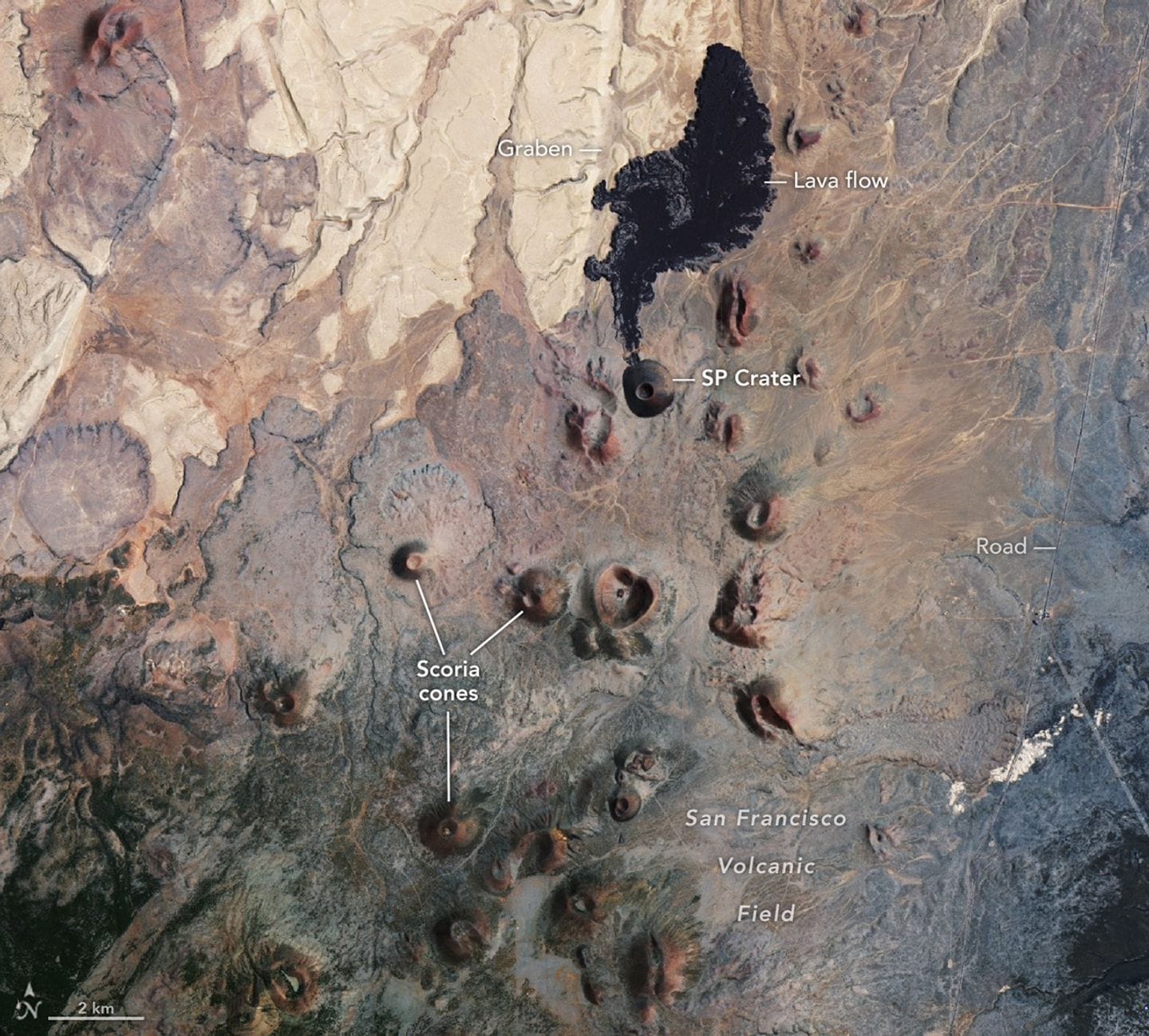
A smaller portion of the planet’s volcanism appears to be explosive, producing volcanic cones, pyroclastic flows, and ashfalls. The hill-shaped scoria cones in Ulysses Colles are notable because explosive features are uncommon on Mars. The CTX (Context Camera) on the Mars Reconnaissance Orbiter captured Ulysses Colles on May 7, 2014, and the OLI (Operational Land Imager) on Landsat 8 photographed similar cones in the San Francisco Volcanic Field in Arizona on June 19, 2025; both images show grabens, rounded hills crowned with circular vents, and lava flows spreading outward from cone bases.
scoria cones, ulysses colles, mars, olympus mons, alba mons, effusive volcanism, explosive volcanism, mariner 9, ctx camera, landsat 8