
Short course of SUMOylation inhibitor plus CAR-T cures most mice with Burkitt's lymphoma
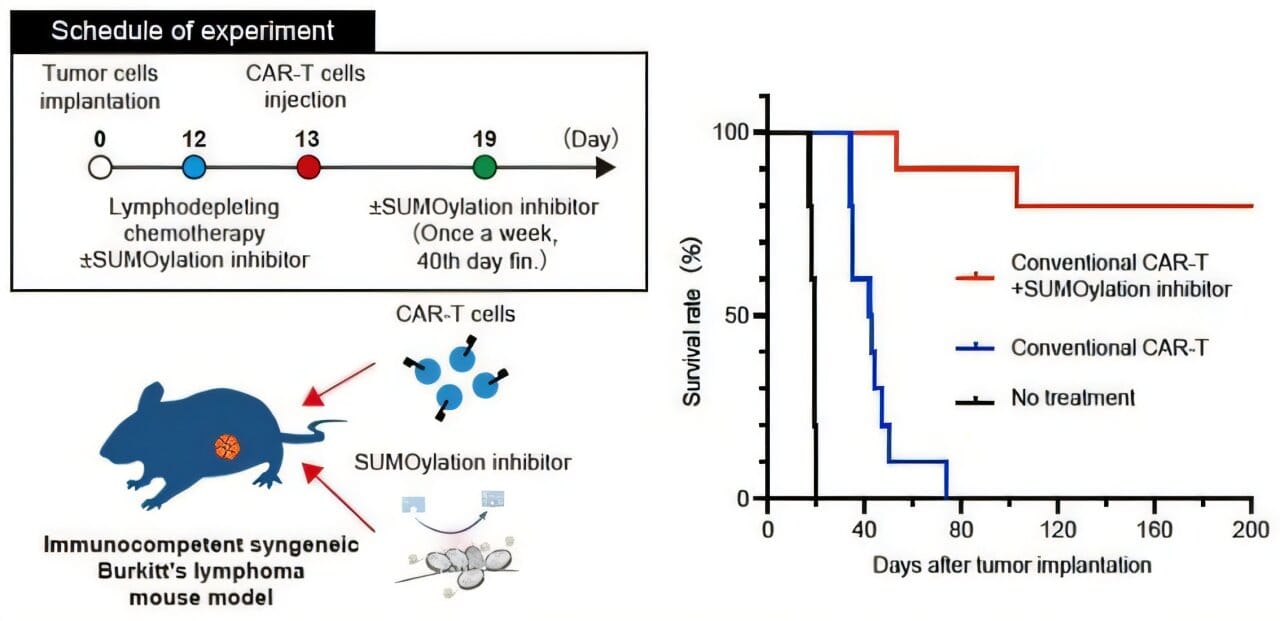
Researchers at Kanazawa University, in collaboration with a scientist at Roswell Park Comprehensive Cancer Center, report that adding a brief course of a SUMOylation inhibitor to CD19 CAR-T therapy produced long-term cures in 80% of mice bearing a high burden of Burkitt's lymphoma.
Burkitt's lymphoma is a rare, aggressive blood cancer driven by MYC gene translocation and most often affects children and young adults. CAR-T cell therapy has shown promise in some blood cancers but has had limited success against Burkitt's lymphoma, and directly targeting MYC has long been difficult.
The team confirmed that the SUMOylation inhibitor TAK-981 slowed Burkitt's lymphoma cell growth, altered signaling pathways and suppressed MYC activity. They also found the inhibitor had a dual effect on CAR-T cells: it produced an early activation that could undermine long-term efficacy, while also triggering an intrinsic "safety brake," suggesting that limited dosing might preserve CAR-T durability.
In mouse experiments, CAR-T therapy alone produced no cures. Combining CAR-T with a single dose of TAK-981 extended survival but did not cure the animals. A short course of five TAK-981 doses alongside CAR-T, however, resulted in long-term, cancer-free survival in 80% of the mice.
Key Topics
Health, Burkitt's Lymphoma, Sumoylation Inhibitor, Myc Gene, Kanazawa University