
Showy Swirls Around Jeju Island
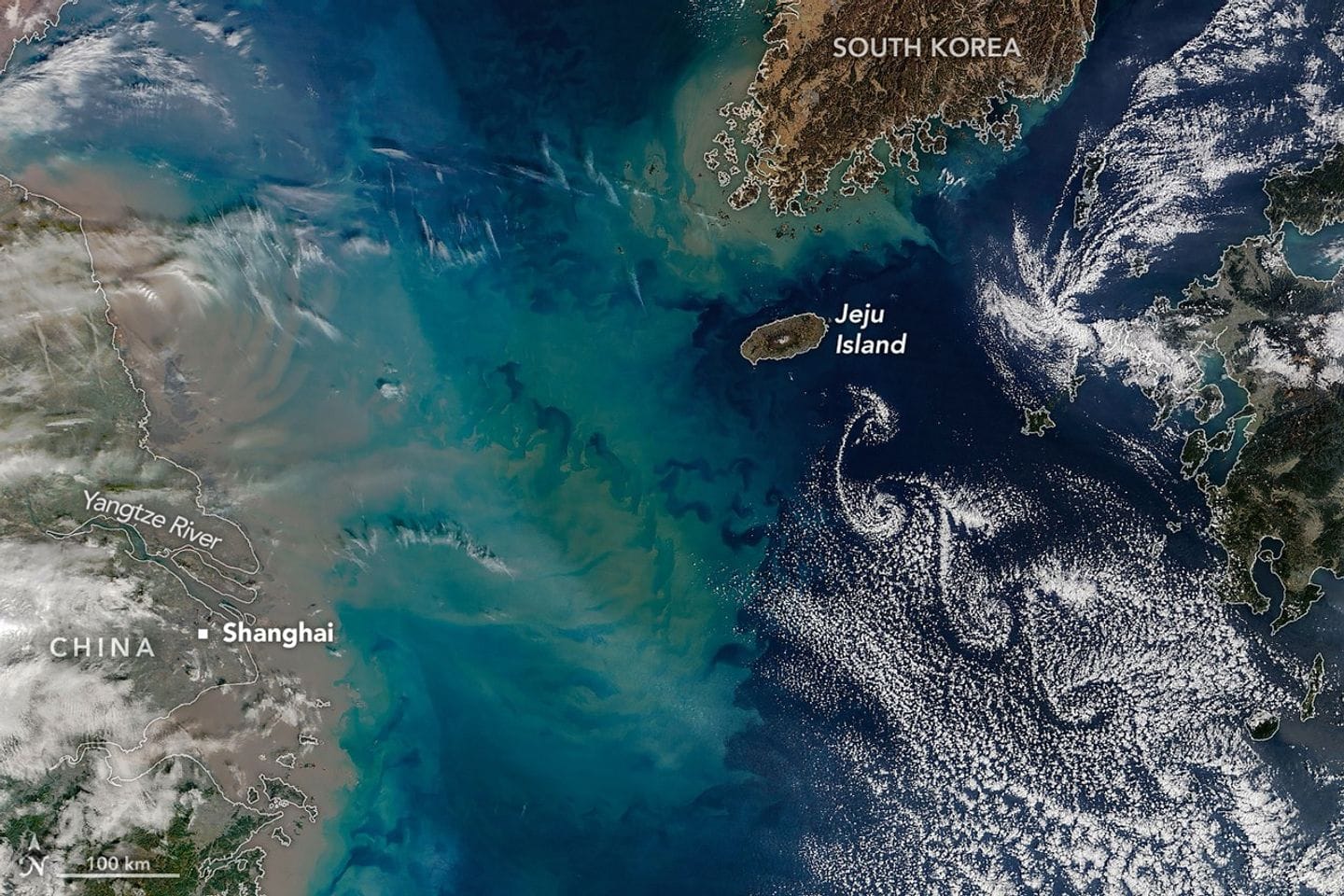
Jeju Island, a volcanic peak about 100 kilometers south of the Korean Peninsula, produced a wake of spiraling clouds and colorful, turbulent water on February 19, 2026. The MODIS instrument on the Terra satellite captured the scene. The island rises about 1,950 meters above sea level; its central shield volcano, Hallasan, last erupted in the 11th century and contains a notable network of lava tubes.
Winds flowing past the tall, isolated landmass created a series of von Kármán vortex streets—staggered counterrotating spirals that form when a fluid passes an obstacle. Vortices require winds in a narrow range to form: if too weak, clouds flow smoothly past, and if too strong, vortices cannot maintain their shape.
The sweet spot for these patterns lies between 18 and 54 kilometers per hour (11–34 miles per hour), and the vortices can appear either wispy, as in this image, or as sharply defined parallel rows, as observed the previous day. The surrounding seas were turbulent as well.
South Korea, Jeju Island
jeju island, hallasan, lava tubes, von kármán, vortex streets, modis, terra satellite, spiraling clouds, turbulent water, shield volcano