Massive Tengiz Expansion Raises Stakes for Chevron and Kazakhstan

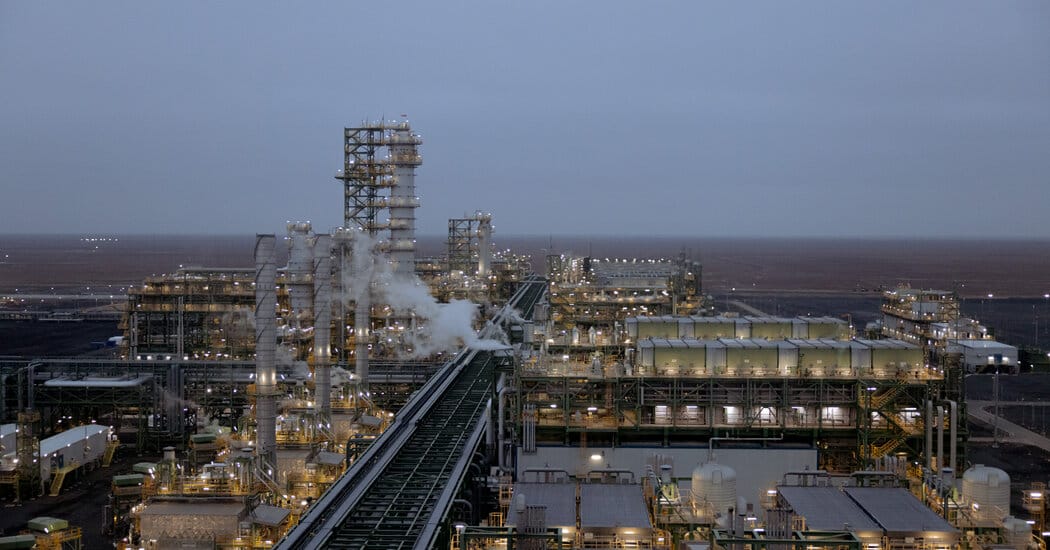
After roughly a decade of work and nearly $50 billion in spending, Chevron and its partners have boosted output at Kazakhstan’s Tengiz oil field to about one million barrels a day. Tengiz sits more than two miles underground in porous reef rocks and is estimated by Tengizchevroil to contain about 25 billion barrels of oil, with a nearby Korolev field holding another 1.6 billion barrels.
The expansion — completed at an estimated cost of $48 billion, about $11 billion over initial projections — added wells, compressors and processing capacity to relieve earlier plant constraints and raise production. The project has deep economic and strategic importance. Tengizchevroil (TCO) is Kazakhstan’s largest producer, supplying more than 40 percent of the country’s output in the first half of 2025 and accounting for almost 10 percent of national GDP.
Chevron owns 50 percent of TCO, with Exxon Mobil at 25 percent, KazMunayGas 20 percent and Lukoil 5 percent. Tengiz’s cash flows are material to Chevron; free cash flow from the field is likely to be around $4 billion for 2025. But the gains come amid rising uncertainty. Exports from Tengiz flow through a pipeline to Russia’s Novorossiysk port, and recent attacks on that route by Ukraine damaged a tanker loading facility and forced a roughly 30 percent output cutback at Tengiz.
Kazakhstan and Chevron also face negotiations to extend their operating agreement for Tengiz, which is set to expire in 2033.
Key Topics
Sports, Chevron, Tengiz, Tengizchevroil, Kazakhstan, Exxon Mobil