
Popular TV Host and Kathmandu Mayor Announce Election Alliance After Youth Uprising
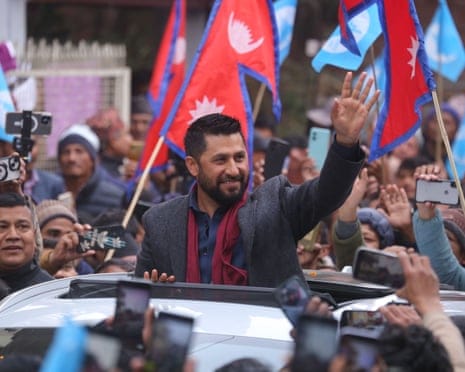
Two of Nepal’s best-known political figures have formalised an electoral alliance ahead of the national vote on 5 March, pledging to respond to demands raised during a deadly youth-led protest earlier in the year.
Rabi Lamichhane, a television presenter and chairperson of the Rastriya Swatantra Party (RSP), and Balendra Shah, the rapper-turned-mayor of Kathmandu known as Balen, signed the agreement on Sunday. Under the deal, Lamichhane will remain chair of the RSP while Shah will be the party’s candidate for prime minister in the upcoming election.
The two leaders said the move was aimed at addressing the concerns of younger Nepalis after the anti-corruption demonstrations in September, which turned into a broader uprising over perceived political failures. At least 77 people were killed during the unrest on 8–9 September, which was initially triggered by anger over a brief government ban on social media and compounded by frustration over prolonged economic stagnation and allegations of entrenched political corruption.
"Consensus should not be as the leader seeks, it should be what the country needs," Lamichhane said in a statement after the agreement was signed.
Lamichhane, 51, founded the RSP in 2022 and rose quickly as a political force by tapping public discontent with Nepal’s established political leadership. He previously served as deputy premier and interior minister. He was recently released on bail in connection with charges related to cooperative fraud and organised crime.
Shah, 35, won popular support in Kathmandu as a mayor who came to politics from an entertainment background. He is widely regarded as a figure associated with the political transition that followed the ousting of the former prime minister’s government; he helped form an interim government that was led by Sushila Karki after KP Sharma Oli’s administration fell.
The alliance positions two prominent non-traditional politicians at the centre of the RSP’s campaign. Both figures have attracted support from sections of the population dissatisfied with mainstream parties and seeking an alternative to established political actors.
Their pledge to prioritise youth demands comes amid ongoing national efforts to ensure a stable environment for the forthcoming election. In the days following the uprising, Sushila Karki held consultations with senior politicians in what was described as the first such round of talks since the protests. She met with KP Sharma Oli, the Nepali Congress president Sher Bahadur Deuba, and Pushpa Kamal Dahal, the coordinator of the Nepal Communist Party.
After those meetings, Karki wrote on social media that the election was a shared responsibility of all stakeholders. "The government is committed to guaranteeing a free and fear-free environment. We are working in a manner that leaves no room for doubt," she said.
Lamichhane and Shah framed their agreement as an effort to translate the energy unleashed by the protests into a political programme. They have emphasised responsiveness to youth concerns and anti-corruption commitments as central themes of the RSP’s platform for the election.
The pairing unites Lamichhane’s national profile and party infrastructure with Shah’s city-based popularity and appeal to younger voters. The move also signals the RSP’s intent to present a unified ticket at the head of its campaign strategy for the parliamentary vote.
Observers of Nepalese politics have noted that the past months have been marked by volatility and public anger over governance issues. The September uprising represented a rare and intense episode of street unrest, and the deaths recorded during the protests heightened calls for political accountability and reform.
By presenting a combined leadership option, Lamichhane and Shah aim to capture momentum among voters seeking change. Their campaign will now proceed against a backdrop of heightened public scrutiny and renewed attention to the demands that drove the youth-led demonstrations.
The Rastriya Swatantra Party’s approach in the run-up to the 5 March election will be closely watched as Nepal prepares for the vote, and as political leaders across the spectrum respond to the issues that animated the protests earlier in the year.
Key Topics
Rastriya Swatantra Party, Rabi Lamichhane, Balendra Shah (balen), Kathmandu Mayor, Nepal Election 5 March, Youth-led Protests, September Uprising, Anti-corruption Demonstrations, Social Media Ban, Political Alliance Agreement, Anti-corruption Platform, Political Accountability, Cooperative Fraud Charges