
U.S. pauses tech pact with Britain, citing insufficient progress on trade
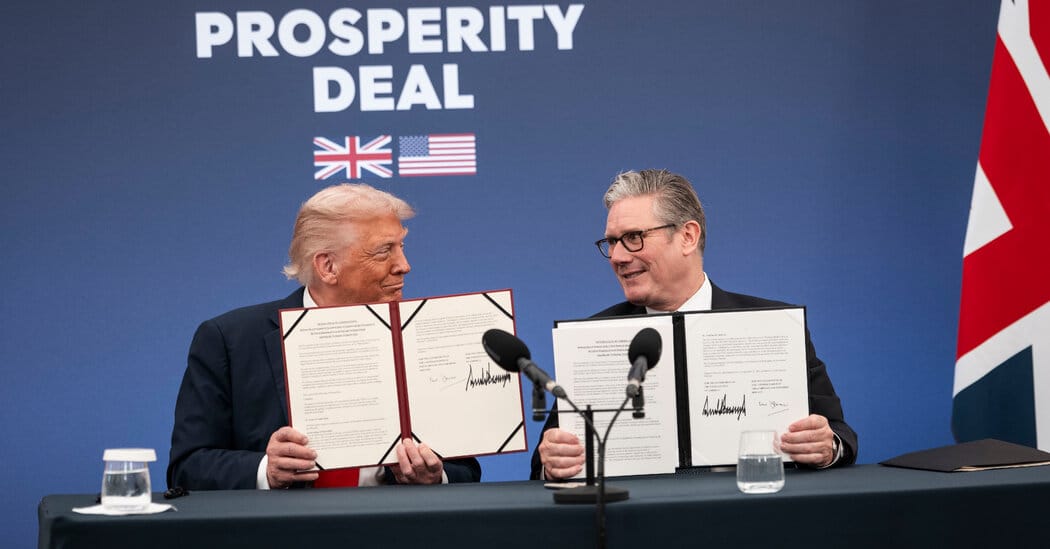
The United States informed the British government this month that it would pause fulfilling a technology-related part of their agreement, the Tech Prosperity Deal, according to two people familiar with the decision who were not authorized to speak publicly. American officials said the move reflected a view that Britain had not made sufficient progress in lowering trade barriers as promised in the May trade agreement.
The Tech Prosperity Deal, signed after President Trump and Prime Minister Keir Starmer pledged deeper collaboration, extended research partnerships and encouraged commercial ties, and U.S. tech companies announced more than $40 billion in investments in Britain. But the deal’s language said it would only “become operative alongside substantive progress being made to formalize and implement” the May Economic Prosperity Deal.
Some commitments in the broader agreement were left loose: there were firm tariff limits on British cars up to a quota and plans to increase American beef exports, while issues such as agricultural market access, Britain’s food safety standards, online safety rules and a digital services tax remained unresolved.
In subsequent months, Britain had not changed its digital services tax and there had not been a new agreement on food exports, the report said. Britain’s minister for business and trade, Peter Kyle, recently met U.S. officials to discuss advancing the May trade agreement; a spokesman for the Department for Business and Trade said Mr.
Key Topics
Business, Tech Prosperity Deal, Economic Prosperity Deal, Keir Starmer, Digital Services Tax