
U.S. raid that captured Maduro complicates China’s stake in Venezuela
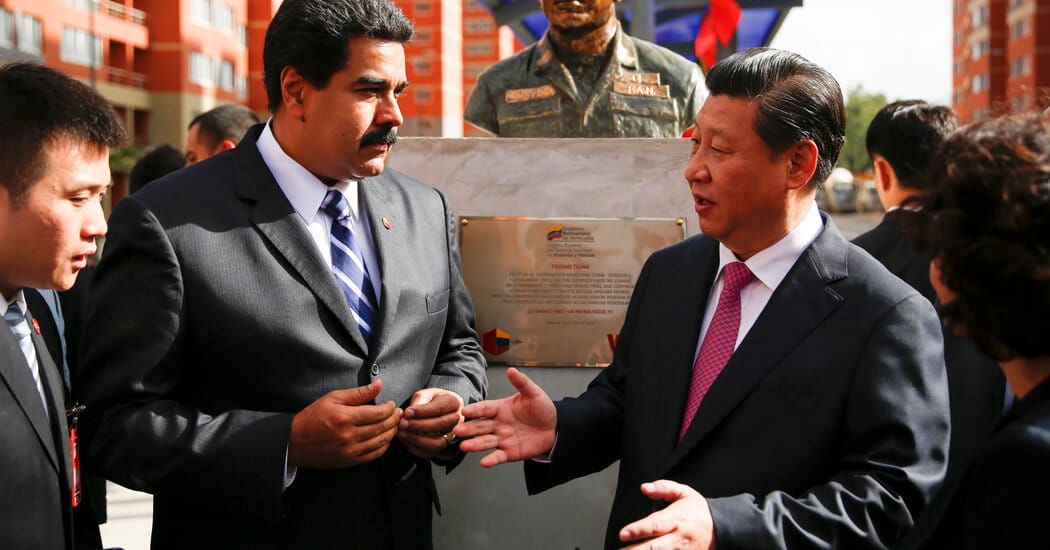
American commandos seized President Nicolás Maduro in Caracas just hours after China’s special envoy met the Venezuelan leader at the presidential palace, a rapid operation that New York Times reporting says threatens Beijing’s decades of investment and billions of dollars in loans to Venezuela.
The White House has framed the operation as an updated Monroe Doctrine — which President Trump has called the “Donroe Doctrine” — a posture the paper says could reinforce a global logic of great powers asserting control in their own regions. Analysts quoted in the coverage warned the assault could keep U.S.
military focus in the Western Hemisphere and, by eroding norms against great-power use of force, potentially benefit Beijing. “It does further erode the norms against great power use of force that have steadily weakened in the last two decades, which works just fine for Beijing,” said Rush Doshi of Georgetown University and the Council on Foreign Relations.
The article notes Beijing has condemned the strike as “deeply shocked” by the “blatant use of force,” and that Mr. Xi criticized what he called “unilateral bullying actions” that are “severely undermining the international order.” It also recalls recent Chinese military pressure on Taiwan — including long-range rockets fired into nearby waters and deployments of bombers, fighter jets and warships — and China’s use of economic coercion toward neighbors.
Key Topics
World, Nicolás Maduro, Venezuela, China, Xi Jinping, Qiu Xiaoqi