
U.S. Start-Up Seeks to Break China’s Grip on Rare-Earth Processing
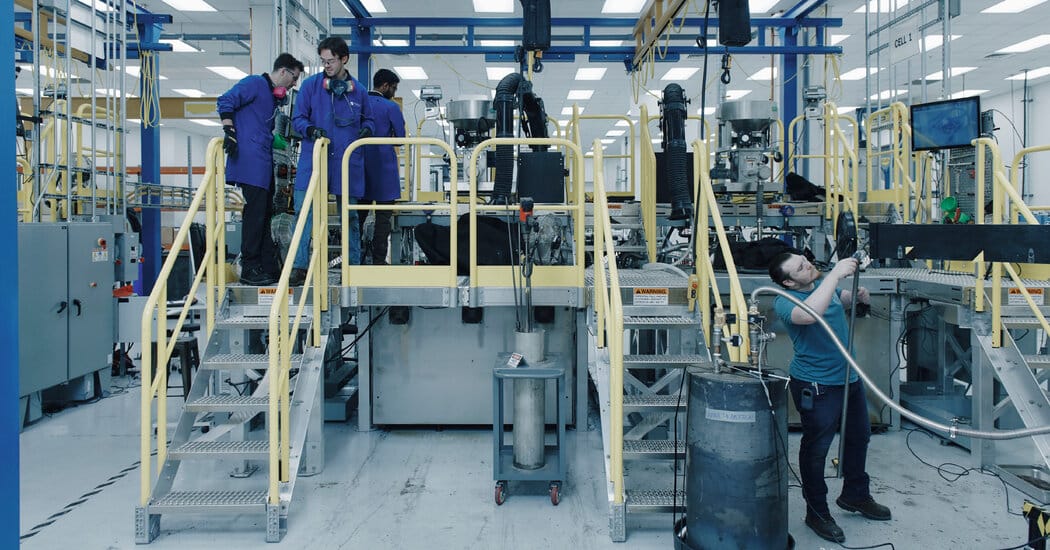
Phoenix Tailings, a Boston-area start-up, has begun producing rare-earth metal at a small plant in Exeter, N.H., turning taupe-colored powder into rough ingots that can be used for electric-vehicle motors and military equipment. Rare earth elements such as neodymium and dysprosium are essential for powerful magnets, lasers and medical devices, but they are difficult to process.
China currently refines more than 90 percent of the world’s rare earths, a dominance that concerns Western governments and companies. The U.S. industry largely retreated after the mid-1990s as Chinese firms expanded under industrial policy and looser environmental rules. Rebuilding domestic capacity has fallen to small companies like Phoenix Tailings and MP Materials, which have begun producing metal in limited quantities.
Phoenix’s Exeter operation, opened about two months ago in a converted medical-device plant, processes metric-ton bags of powder sourced from suppliers in the United States, South America and Australia. Its closed-loop system is designed to avoid the perfluorocarbon emissions associated with some methods used elsewhere.
Nick Myers, Phoenix Tailings’s chief executive, said the company has moved away from Chinese supply and aims to eventually control the entire chain from tailings to metal. The company was recently valued at $189 million and has received more than $6 million in federal funding.
Key Topics
Sports, United States, Business, Rare Earths, Manufacturing, China, Clean Energy