
Wall Street retreats from net‑zero finance pledges after initial push
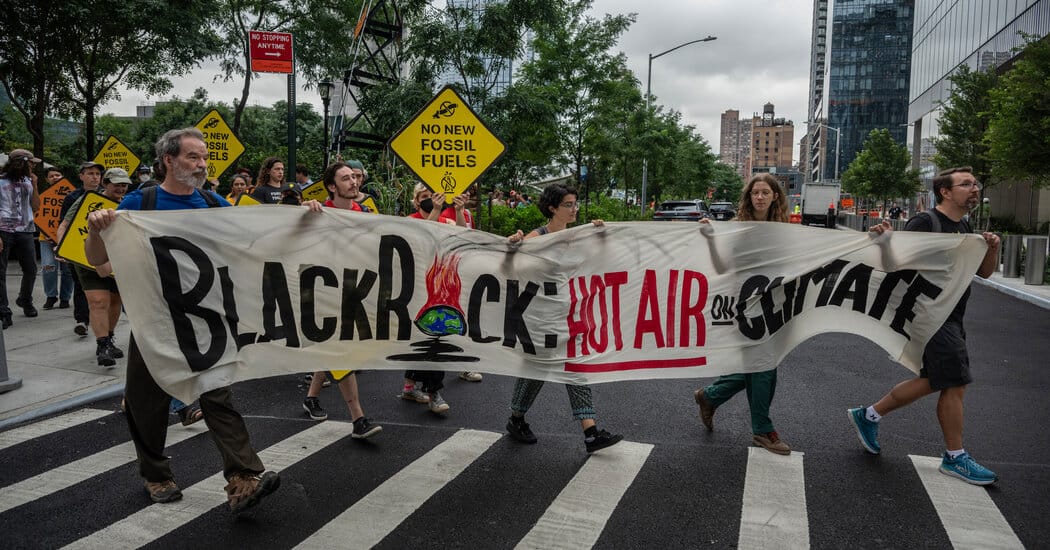
Six years after major financial firms pledged to use trillions of dollars to fight climate change, those efforts have largely collapsed, with many institutions walking back commitments and industry alliances unraveling. The movement began after BlackRock’s chief executive Larry Fink declared in 2020 that the firm would use its assets to confront climate change and other firms followed.
E.S.G. investing and the Glasgow Financial Alliance for Net Zero (G.F.A.N.Z.) — which said it would harness some $130 trillion in assets and drew more than 450 financial groups — became central to Wall Street strategy. At the same time U.S. investment in clean energy reached $279 billion last year, investors have pulled tens of billions from E.S.G.
funds each quarter and mentions of “climate” and “sustainability” on earnings calls have plunged by 75 percent, according to a Bloomberg analysis. Conservative backlash and political pressure played a major role in the reversal, the reporting says. Republican state treasurers and conservative groups withdrew funds and lobbied against E.S.G.
practices, more than 100 bills were introduced to penalize financial companies that supported E.S.G., and state and congressional investigations and subpoenas followed. G.F.A.N.Z. severed ties with the U.N.-backed Race to Zero in 2022 amid the controversy.
Key Topics
Business, Blackrock, Larry Fink, Gfanz, Esg, Net-zero Banking Alliance