
Wildfires threaten ancient alerce forests in Los Alerces National Park
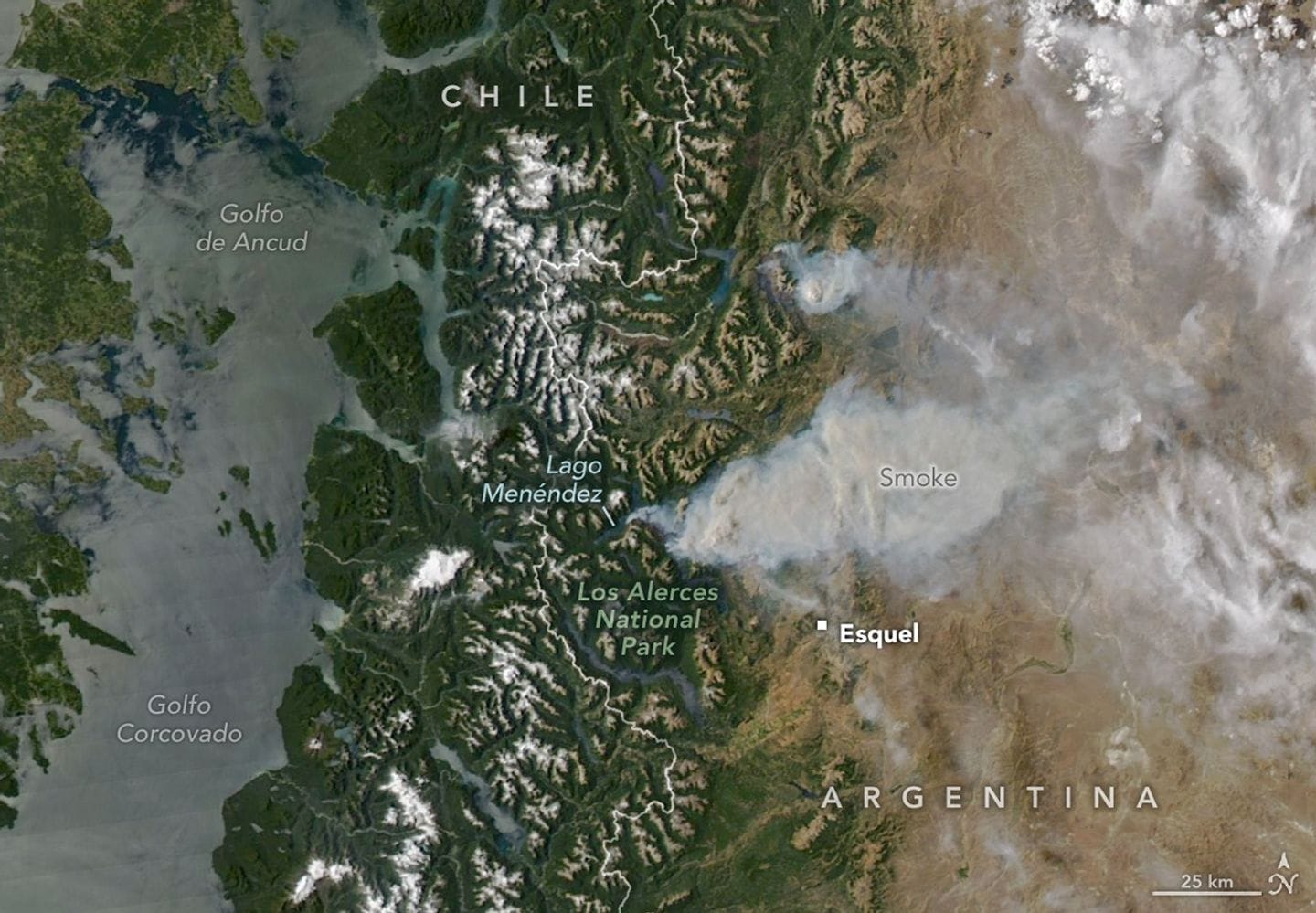
Wildfires spread through Los Alerces National Park in Argentina’s Chubut province in early January 2026, threatening rare alerce (Fitzroya cupressoides) stands, NASA satellite imagery shows. On January 8, 2026, the MODIS instrument on NASA’s Aqua satellite captured smoke from two large fires; satellites began detecting widespread fire activity on January 6.
The more southerly blaze moved east along ridges between Lago Rivadavia, Lago Futalaufquen, and Lago Menéndez, while a northerly fire burned steep hillsides around Lago Epuyén. Satellite-based estimates from the Global Wildfire Information System indicate more than 175 square kilometers were charred across Patagonia between January 5 and 8.
The affected ridges are blanketed with temperate Patagonian Andean forest, including Valdivian rainforest and rare stands of alerce, a slow-growing cypress that is the second-longest-lived tree species, with some individuals surviving more than 3,600 years. UNESCO documents say Los Alerces National Park protects 36 percent of Argentina’s alerce forests, including stands with the greatest genetic variability on the eastern Andes and the country’s oldest individuals.
News outlets and the national park reported that firefighters faced high temperatures, low humidity, and strong winds. Standardized Precipitation Index data from the National Integrated Drought Information System show unusually dry conditions over recent months that likely primed vegetation to burn.
Key Topics
Science, Los Alerces, Fitzroya Cupressoides, Chubut Province, Valdivian Rainforest, Lago Epuyén