
Winter rise in colds linked to behaviour, not simply going out in the cold
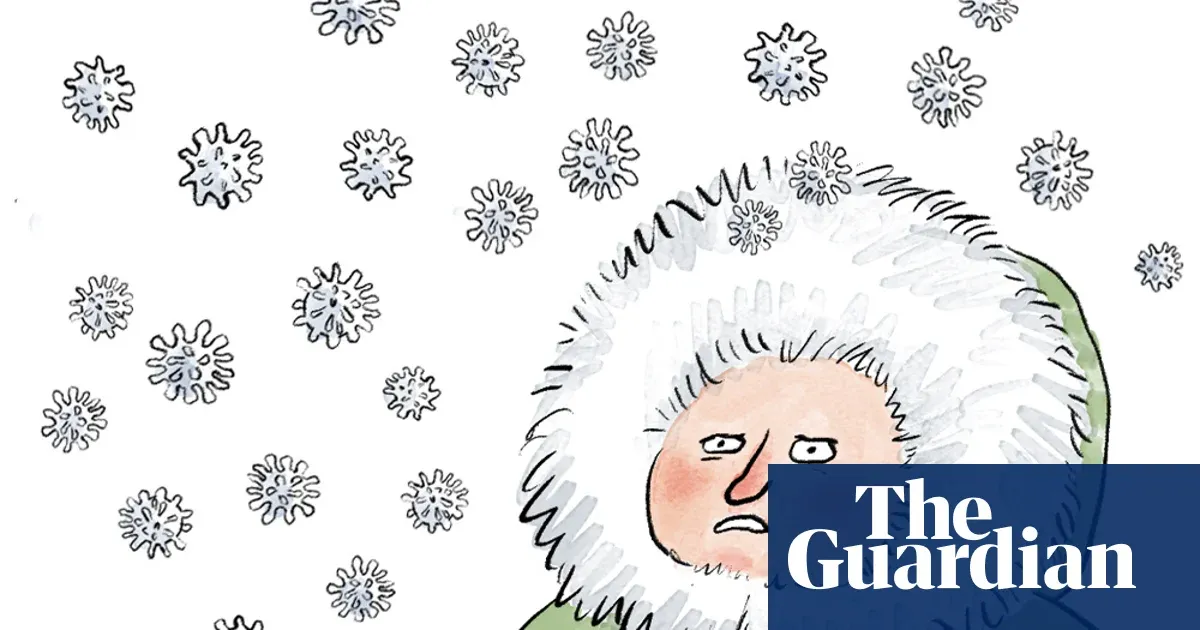
Going outside when it is chilly does not directly make you catch a cold, according to John Tregoning, a professor in vaccine immunology at Imperial College London: “Colds are more common in the winter, but it’s almost certainly correlation, not causation.” One marginal factor is UV light, which can kill viruses: sneezing outside in summer may expose viral droplets to sunlight that can deactivate the virus and faster evaporation can cause desiccation.
But Tregoning says the main driver is behavioural. In colder months people spend more time indoors with poorer ventilation and in closer contact with others. Different cold and flu viruses peak at different times in the winter: Tregoning notes that rhinovirus spikes when kids return to school and RSV peaks around new year.
Data from the Covid-19 pandemic underlines how much human contact matters: many other viruses largely disappeared during lockdown because people weren’t interacting, and one strain of flu even became extinct due to lack of spread. Tregoning adds that extreme cold can affect susceptibility — “If you were cold all the time, losing calories and exhausted, you’d be more prone to infection.” Studies also show rhinoviruses grow a little better at cooler temperatures and the body’s defences are slightly reduced in colder air.
Key Topics
Health, John Tregoning, Imperial College London, Rhinovirus, Rsv, Vaccination