
Winter storms paralyze northern Japan
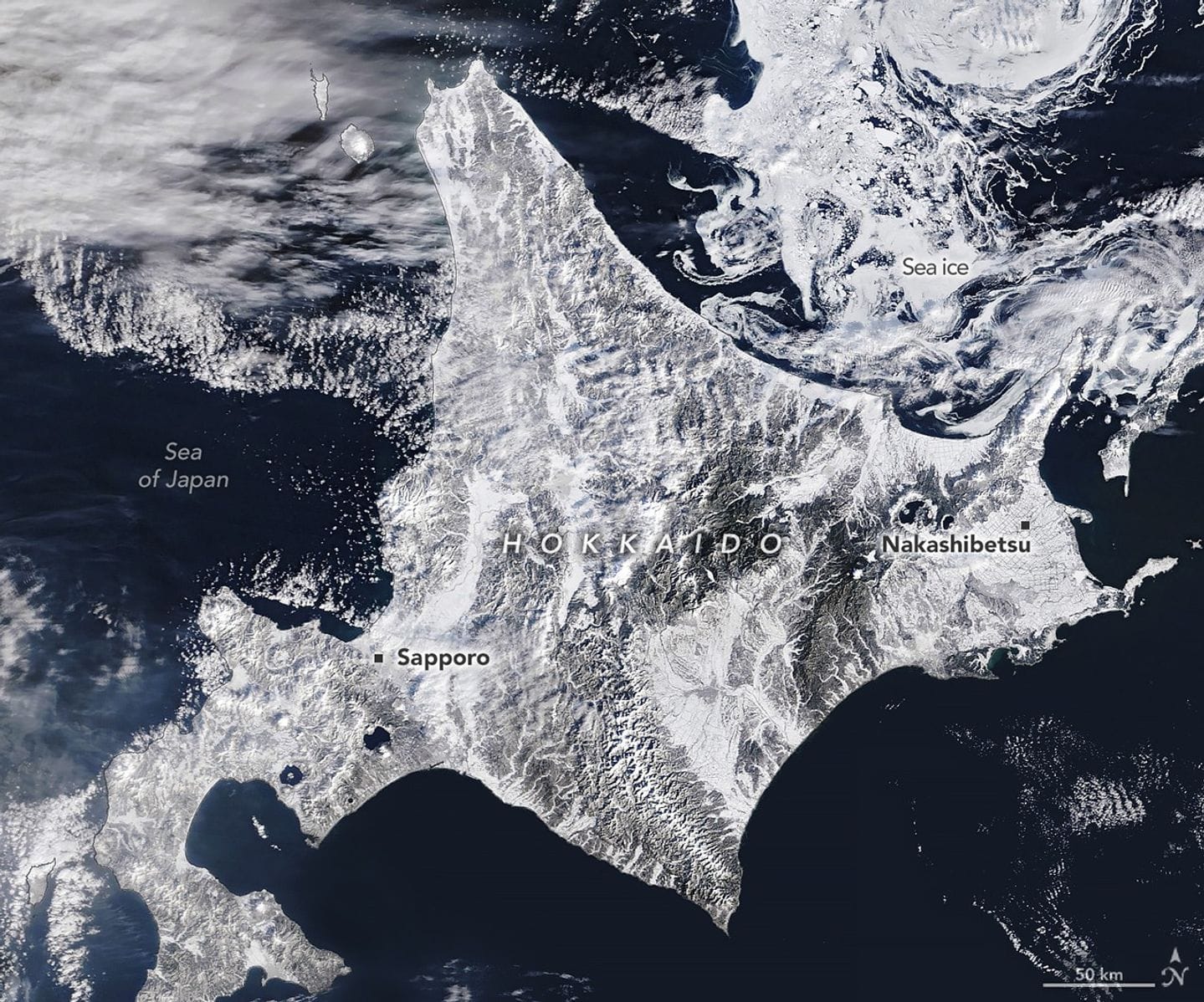
Northern Japan, especially the island of Hokkaido, regularly sees heavy snow. Sapporo typically experiences more than 140 days of snowfall and nearly 6 meters of accumulation each year, and the region often gets dry, powdery “sea‑effect” snow when frigid Siberian air moves across the warmer Sea of Japan.
This winter, a series of intense storms in January and February repeatedly disrupted travel, closing airports, snarling roadways, and suspending trains. Storms that dropped more than 2 meters of snow in Aomori prompted authorities to deploy troops to help clear roofs; Japan's Fire and Disaster Management Agency recorded dozens of deaths and hundreds of injuries.
The MODIS instrument on the Terra satellite acquired an image on February 5, 2026 showing snow‑covered landscapes across Hokkaido. The island, home to more than 31 active volcanoes, contains several large caldera lakes—at least five are visible in the image—and features checkerboard patterns of forested windbreaks near Nakashibetsu.
Japan, Hokkaido
hokkaido, sapporo, aomori, heavy snow, sea-effect snow, sea of, siberian air, terra satellite, modis, caldera lakes